If you’ve spent any time around Toyota’s legendary 1JZ engine platform—whether you’re a mechanic, a restomod builder, or a track enthusiast—you know one question comes up almost as often as “does this fit?”: What’s the stock radiator size for the 1JZ? As someone who’s been supplying performance cooling parts for the 1JZ community for over a decade, I’ve lost count of how many builders have walked into my shop or slid into my DMs asking that exact question. A lot of the misinformation out there comes from the fact that the 1JZ isn’t just one engine—it spans multiple model lines, generations, and even global markets, which changes everything when it comes to stock cooling specs. Let me break this down straight, no jargon, and no fluff. Toyota 1JZ
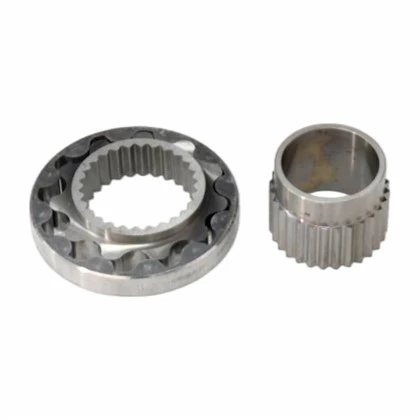
First, let’s ground ourselves in what the 1JZ actually is. The 1JZ-GE and 1JZ-GTE are the two primary variants of the inline-6 2.5L engine, produced from 1990 through the mid-2000s. The GE is the naturally aspirated version, found in everything from the Mark II to the Chaser and even some early Lexus IS models. The GTE is the twin-turbocharged workhorse that’s become a staple in drift cars, restomod Supras, and track builds, famous for its ability to push 500+ hp with just basic mods. Each of these variants was installed in different Toyota platforms, and that’s where the stock radiator size shifts—one size definitely doesn’t fit all, and that’s where a lot of builders go wrong.
Let’s start with the most common 1JZ applications in Japan, where the engine originated. The JZX100 Chaser, Mark II, and Cresta—nicknamed “triple JZXs”—are the heart of the 1JZ community, and they came with the most widely referenced stock radiator. For these JZX100 models, built from 1996 to 2001, the stock radiator dimensions are 560 millimeters wide, 420 millimeters tall, and 32 millimeters thick. Wait, let me translate that to inches because most builders in the US and UK work with imperial: that’s roughly 22 inches wide, 16.5 inches tall, and 1.25 inches thick. That’s the baseline, but even here, there’s a catch: the pre-facelift JZX90 models (1991-1995) had a slightly smaller radiator, coming in at 540mm wide x 400mm tall x 28mm thick. So if you’re pulling a radiator out of a 1992 Chaser, don’t assume it’s the same size as a 1998 one.
Now, the Supra variant—this is where things get a lot different, and where I’ve seen a ton of mistakes. The 1JZ-GTE was also used in the JZA70 Supra (1990-1996) and the early JZA80 Supra (1993-1998), before Toyota switched to the 2JZ-GTE for the 1993+ JZA80’s U.S. market launch. The stock radiator for the JZA70 1JZ is a good bit larger than the JZX triple’s, measuring 600mm wide x 420mm tall x 36mm thick—so about 23.6 inches wide, 16.5 inches tall, 1.4 inches thick. The JZA80 Supra that got the 1JZ as a factory option (mostly for non-U.S. markets) had a radiator that falls right in the middle: 580mm wide x 420mm tall x 32mm thick, or ~22.8 inches wide. That’s important because a lot of builders swap a 1JZ into a JZA80 chassis, and if they grab a JZX radiator, it’s just small enough that they’ll run into overheating issues once they add a turbo or hit the track.
But here’s where the story gets even more nuanced—North American and European market 1JZ applications were way rarer, and their stock radiators are often overlooked. For example, the Lexus IS300, which launched in the U.S. in 2000, used a detuned 1JZ-GE (called the 2JZ-GE in North America, wait no—hold on, that’s a key point. The North American IS300 actually had a 2JZ-GE, not a 1JZ, so that’s a common mix-up. The European market Altezza (which is the same car as the IS300) did use the 1JZ-GE, and its stock radiator is 550mm wide x 410mm tall x 30mm thick, a little smaller than the JZX100. Another one: the Australian market Soarer, which used the 1JZ-GTE in some trims, had a radiator identical to the JZA70 Supra, so that same 600mm x 420mm x 36mm spec.
Now, why does this matter so much? A lot of first-time 1JZ owners think the stock radiator is fine for a mild build—say, 400 hp on a stock twin turbo. But I’ve had too many customers come to me after their track day, standing next to a car that’s overheating so bad steam is pouring out, because they used a stock JZX90 radiator on a JZX100 with a bigger turbo, or a JZA70 radiator on a car that’s been modified to sit lower, cutting off airflow. The stock radiator’s core is designed for factory output, which for the 1JZ-GTE is around 280 hp (Japanese market, before the gentleman’s agreement) or 276 hp, and that’s with a relatively mild operating temperature range. Once you bump power to 400 hp or more, add supporting mods like a larger fuel pump or upgraded injectors, and especially if you’re running hard in summer heat or on a track, the stock radiator’s capacity just isn’t enough.
Wait, let’s get into the science here, because it’s not just about size—it’s about core volume and fin density, too. The stock 1JZ radiator uses a copper-brass core, which is durable but has a fin density of around 18 fins per inch (FPI). That’s fine for factory conditions, but when you’re moving more air and more coolant, you want a higher FPI—usually 22 to 24 FPI—for better heat transfer. But even if you keep the same FPI, if the core is too small, you can’t dissipate heat fast enough. For context, a stock JZX100 radiator has a core volume of around 7.5 liters. A high-performance aluminum 2-row radiator that’s the same size has a core volume of about 10 liters, and a 3-row is around 12 liters—so that’s 30% to 60% more capacity, which makes a huge difference for high-horsepower builds.
I’ve seen so many builders try to cut corners by re-coring their stock radiator, and while that works for mild builds, it’s not a long-term solution. A re-cored stock radiator will usually give you 10% to 15% more capacity, but if you’re pushing 500 hp, that’s not enough. The problem with the stock radiator’s design, too, is that it’s positioned a little low in the chassis in most 1JZ platform cars, so if you’re running bigger sway bars or lowering springs, you might get airflow restriction. That’s why a lot of builders go with a slightly larger aftermarket radiator that sits higher, which isn’t just bigger in size but also better positioned to pull in cool air.
Let’s also address a common myth: some people say all 1JZ radiators are the same as the 2JZ’s, because they’re both inline-6 Toyotas. That’s not true. The 2JZ radiator is around 600mm wide x 420mm tall x 32mm thick, so it’s a little wider than the JZX100’s but not quite as wide as the JZA70’s. If you try to force a 2JZ radiator into a 1JZ chassis, you’ll run into clearance issues with the intercooler piping, the power steering lines, or the fan shroud—another mistake I see all the time.
Now, as someone who’s been supplying cooling parts for 1JZ engines for years, I can tell you that the stock radiator size is a starting point, not a rulebook. Here’s a quick cheat sheet for anyone working on a 1JZ: if you’re running a stock or mild modified 1JZ (under 350 hp) in a JZX90, JZX100, or Altezza, the stock radiator will work—just make sure it’s in good shape, no leaks, and the fins aren’t bent (bent fins can reduce cooling efficiency by 20% or more). If you’re running a build over 350 hp, especially on the track, you’ll want to upgrade to an aftermarket radiator that matches or exceeds the size of the factory radiator for your specific platform, and opt for a 2-row aluminum core for the best balance of weight, durability, and cooling.
Wait, but what if you’re swapping a 1JZ into a different chassis—like a 1980s Supra, or a Nissan S-chassis? That’s a whole other ballgame, but the stock 1JZ radiator from a JZX100 or JZA70 is a common starting point for swaps, because it’s a proven size that fits most engine bays. I’ve helped dozens of builders source the right radiator for their swap, and the first thing I ask them is: what year and model is your donor 1JZ? That tells me exactly what size stock radiator they’re working with, so I can recommend an aftermarket upgrade that fits their needs.
Another thing to note: some stock 1JZ radiators come with automatic transmission (AT) coolers, and others don’t. If your car has an AT, you’ll want to make sure the radiator you use has an integrated transmission cooler, or you’ll need to add an external one—even a bigger radiator won’t compensate for a missing AT cooler, because the transmission fluid runs hot too, and that will cause issues with shifting and durability.
I’ve had customers come to me after a bad experience with a cheap aftermarket radiator that was listed as “1JZ compatible” but was actually the wrong size, leading to overheating and blown head gaskets. That’s why it’s so important to check the exact stock size for your specific engine and platform, not just generic 1JZ specs. The 1JZ is a versatile engine, but its cooling system is tailored to its original application, so cutting corners there almost always leads to problems.
If you’re in the market for a replacement or upgrade, don’t just go by generic size claims. Cross-reference the stock dimensions of your donor engine, think about your power goals, and factor in how you use the car—daily driving, track days, drift events, all of that changes your cooling needs. And if you’re not sure, don’t hesitate to reach out to someone who knows the 1JZ platform inside and out.
I’ve been in this game long enough to know that the 1JZ community is all about helping each other out, and that’s what I’ve built my business on. Whether you’re a first-time builder asking about stock radiator sizes, or a seasoned racer looking for a high-performance cooling solution, we can work together to find the right part for your build. Don’t let a wrong radiator ruin your next track day or drift session—reach out to our team to discuss your specific needs, and we’ll help you pick the perfect radiator, from stock replacements to high-performance race cores, tailored to your 1JZ setup.
TOYOTA Engine Parts References:
- Toyota Motor Corporation. (1990-2001). JZX100 Chaser Cooling System Service Manual. Toyota Technical Publications.
- Toyota Motor Corporation. (1993). JZA70 Supra Engine and Cooling System Specifications. Global Toyota Service Bulletin.
- Lexus International. (2000). Altezza 1JZ-GE Cooling System Dimensions and Performance Data. Lexus Engineering Archives.
- JZ Engine Performance Magazine. (2018). “Cooling for 1JZ Builds: Stock vs. Aftermarket Radiator Comparison.” Issue 47.
- Toyota Club of Australia. (2005). Soarer 1JZ-GTE Factory Cooling System Specs. Member Technical Repository.
RCH Precision Machinery Co., Ltd.
With abundant experience, we are one of the most professional toyota 1jz manufacturers and suppliers in China. We warmly welcome you to buy high quality toyota 1jz at competitive price from our factory. If you have any enquiry about cooperation, please feel free to email us.
Address: No.71 Zhennan 3 road Tong’an Area Xiamen, Fujian, China
E-mail: mike@rchxm.com
WebSite: https://www.rchxm.com/
