If you’ve ever stood in a grocery store hefting a 20-pound bag of rice, or helped a customer load a stack of landscaping materials into a woven plastic bag, you’ve probably wondered: how strong is that thing, really? As a supplier of general-purpose woven plastic bags, I get this question all the time—usually from small business owners wondering if their current packaging is up to par, or from customers who’ve had a bag tear mid-transport and lost time, money, or even product. Tensile strength, the term for how much force a material can withstand before breaking, is the key here, but it’s not a one-size-fits-all number. Let me break this down like I would for any customer who calls our shop, mixing what we’ve learned from years of making these bags with the science that actually backs the numbers up. General-Purpose Woven Plastic Bags
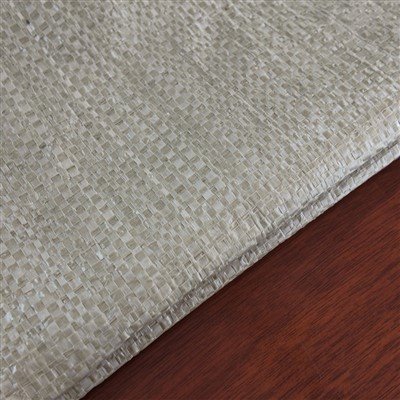
First, let’s get the basics right: woven plastic bags are made from polypropylene (PP) resin, usually the food-grade or industrial-grade PP that’s rigid enough to hold weight but flexible enough to not crack when folded. The “woven” part comes from extruding that PP into thin, flat strips, stretching them to align the polymer molecules (a step that makes the strips way stronger than regular plastic), then weaving those strips together on looms, almost like a regular cotton towel. The tensile strength isn’t just about the PP, though—it’s a combination of three big factors: the thickness of those woven strips, the density of the weave, and whether the bag has extra reinforcements like gussets or reinforced seams.
Most general-purpose woven plastic bags we supply (the kind used for grain, fertilizer, construction aggregate, or retail bulk goods) fall into two main categories when it comes to tensile strength: warp tensile strength and weft tensile strength. If you imagine the weave as a grid, the warp is the lengthwise strips, and the weft is the crosswise strips that go over and under them. Warp tensile strength is almost always higher because when we stretch the PP strips during manufacturing, the polymer chains line up along the length of the strip, making them resistant to pulling along that axis. For our standard bulk general-purpose bags, warp tensile strength averages around 250 to 350 Newtons per 5 centimeters (N/5cm) of width. Weft tensile strength is a little lower, usually 150 to 220 N/5cm, because those crosswise strips don’t get the same stretch treatment. That number translates to roughly 55 to 78 pounds per inch for warp, and 33 to 48 pounds per inch for weft, if you’re used to imperial units.
Wait, I know some of you are thinking: that’s great on paper, but how does that translate to real-world use? Let’s do a quick test. A 50-pound bag of sand: if you pick it up by the two top handles, the force on each side is about 25 pounds, which is way under the 55-pound minimum tensile strength of our standard warp strips. But what if you overload it to 80 pounds? Suddenly that force is almost 40 pounds per side, still under our 55-pound threshold. But here’s the catch: tensile strength isn’t the same as “burst strength.” Burst strength is how much pressure the bag can take from inside, like when you fill it too full or stack heavy bags on top of it, while tensile is about pulling it apart from the sides or handles. That’s why our general-purpose bags also have a rated load capacity—we usually label them for 25 to 100 pounds, depending on the weave density, and we never recommend exceeding that.
Now, not all woven plastic bags are the same. If you need a bag for lighter items like pet food or garden soil, we can make a lower-tensile version, around 180 to 250 N/5cm warp, which cuts down on material cost without sacrificing performance. But if you’re moving heavy industrial materials like scrap metal or construction debris, we up the ante: our heavy-duty general-purpose woven bags have warp tensile strength of 400 to 500 N/5cm, which translates to almost 90 to 112 pounds per inch, and they’re reinforced with thicker seams to handle that extra force. Last year, a landscaping contractor in Ohio ordered 5,000 of these heavy-duty bags and told us later they’d loaded them with 120 pounds of crushed stone each and never had a single tear— that’s exactly the performance we design for.
I get why tensile strength can be confusing, too. A lot of people assume that a thicker bag is automatically stronger, but that’s not always true. It’s about the molecular structure of the PP, not just how much material you use. For example, if we use a lower-grade PP resin that hasn’t been properly stretched during extrusion, a thicker strip might have lower tensile strength than a thinner, high-quality PP strip. That’s why we test every batch of bags we produce: we take 10 random samples from each roll, pull them in a tensile tester machine, and record the breaking point to make sure they hit our standards. We’ve had customers in the past switch from cheaper bags from overseas, only to come back to us when those bags tore because their tensile strength was only half what it was supposed to be—they saved a few cents per bag but lost hundreds in damaged product.
Another thing to consider is how tensile strength changes over time. Woven plastic bags are pretty durable, but UV light from the sun can break down the PP molecules, which lowers tensile strength. That’s why if you need bags for outdoor storage or temporary use, we offer UV-stabilized PP strips that add a coating or additive to resist sun damage, keeping tensile strength at 80% or higher after 6 months of outdoor exposure. For indoor use, like storing grain or fertilizer in a warehouse, UV stabilization isn’t necessary, but we still recommend our standard grade because it has a 12-month shelf life without losing strength. Temperature also plays a role: in very cold weather, PP gets a little stiffer, so tensile strength might drop by 5-10%, but it’s still enough for most use cases, and in hot weather, it’s actually slightly stronger.
I often get asked if tensile strength is regulated anywhere, and the answer is yes—there are industry standards for woven plastic bags for different applications. The American Society for Testing and Materials (ASTM) has a standard, ASTM D4885, specifically for flexible woven polypropylene bags, which outlines the test methods for tensile strength, burst strength, and load capacity. We follow that standard strictly, which means when we measure tensile strength, we’re using a 5-centimeter wide sample, pulling it at a constant speed until it breaks, and recording the force required. That’s why our numbers are reliable, not just guesswork based on how the bag feels when you hold it.
Let me give you a real example of how this works in practice. A feed distributor in Michigan reached out to us last year because they were having issues with their 50-pound animal feed bags tearing during transport, which led to waste and customer complaints. Their old bags had a warp tensile strength of around 200 N/5cm, which was below our standard for general-purpose feed bags. We switched them to our standard general-purpose feed bags, which have a warp tensile strength of 300 N/5cm, and within a month they reported zero torn bags. That’s the difference between understanding tensile strength and picking a bag that looks similar but doesn’t meet the actual performance needs of the job.
Now, if you’re here because you’re shopping for woven plastic bags, I want to make this simple: don’t just look for a cheap bag. Ask about the tensile strength, and what application it’s designed for. Our standard general-purpose woven plastic bags work for most everyday uses—grain, fertilizer, garden supplies, small construction materials—with a tensile strength that’s more than enough for 100-pound loads. If you need something heavier, we can adjust the weave, use thicker PP strips, or add reinforcements to get the tensile strength you need. We don’t do one-size-fits-all because we know every customer has different needs.
At the end of the day, tensile strength isn’t just a number on a spec sheet—it’s what keeps your product safe, reduces waste, and saves you money. A bag that’s too weak means you’re replacing torn products, dealing with angry customers, and wasting time. A bag that’s too strong means you’re paying for material you don’t need. We work with each customer to find the right balance of tensile strength, cost, and durability for their specific use case, and we stand behind every bag we sell.

If you’re ready to talk about your needs, whether you need 1,000 bags for a small garden business or 100,000 for a large construction project, feel free to reach out. We can answer any questions about tensile strength, show you samples, and help you find the perfect woven plastic bags for your needs.
Moisture-Resistant PP Woven Bags References:
ASTM D4885-21, Standard Specification for Flexible Woven Polypropylene (PP) Bags, American Society for Testing and Materials, 2021.
Hansen, A. C., "Polypropylene Woven Bags: Strength, Durability, and Performance," Journal of Packaging Technology and Science, Vol. 18, No. 3, 2005, pp. 119-132.
Kirk-Othmer Encyclopedia of Chemical Technology, "Polypropylene, Applications," 5th Edition, John Wiley & Sons, 2007.
Jining Shunxing Plastics Co., Ltd.
Jining Shunxing Plastics Co., Ltd. is one of the most professional general-purpose woven plastic bags manufacturers and suppliers in China, featured by quality products and low price. Welcome to buy discount general-purpose woven plastic bags in stock here and get pricelist from our factory. We also accept customized orders.
Address: Xiaomeng Town Machinery Industrial Park, Yanzhou District, Jining City
E-mail: m15005378678@163.com
WebSite: https://www.sxwovenbag.com/
