If you’ve ever worked on underground drainage projects, you know that the success of a run doesn’t just depend on the pipe itself—it’s in the way the fittings come together. As someone who’s been supplying butt fusion drainage fittings for over a decade, one question I get asked more than any other is: “What’s the thermal conductivity of these fittings, and why does it even matter?” I get it, thermal conductivity sounds like a lab-coat-only term, something that’s easy to write off as a detail only engineers care about. But after seeing too many projects derailed by unexpected pipe expansion, frost damage, or even joint failure because no one paid attention to this number, I’ve learned it’s one of the most practical specs you can look at for drainage work. Let’s break this down like I would over a coffee with a contractor or a project manager, no jargon overload, just the real story behind butt fusion fittings and heat transfer. Butt Fusion Drainage Fittings
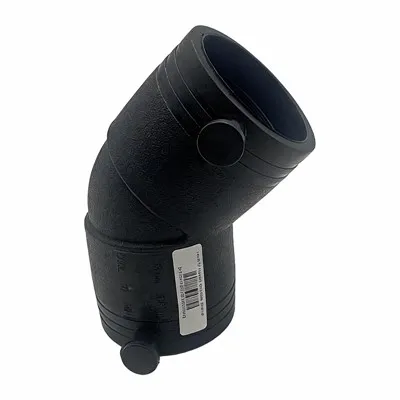
First, let’s get one thing straight: butt fusion drainage fittings aren’t a single product. They come in different materials, each with their own thermal properties, and that’s where the thermal conductivity number comes from. Most of the fittings I supply are made from polyethylene (PE), specifically high-density polyethylene (HDPE) for most underground work, and sometimes medium-density polyethylene (MDPE) for smaller, above-ground drainage lines. Occasionally, for specialized projects, we offer polypropylene (PP) fittings too. Each of these plastics has a thermal conductivity that’s way different from metal pipes—like steel or copper, which are common for other plumbing applications—and that difference shapes how you design, install, and maintain a drainage system.
Let’s start with the basics of thermal conductivity, just to make sure we’re on the same page. Thermal conductivity is a measure of how well a material transfers heat. A high number means heat moves through it quickly; a low number means it’s an insulator, holding heat in or keeping cold out. For drainage, that matters for two big scenarios: systems that carry waste water (which can be hot, from kitchen sinks or commercial laundry) and systems that are buried in climates with extreme cold, where frost can seep into the ground.
Take HDPE, the workhorse of most butt fusion drainage fittings. The thermal conductivity of HDPE is typically around 0.4 to 0.5 Watts per meter Kelvin (W/m·K) at room temperature. Compare that to carbon steel, which is around 50 W/m·K—over 100 times higher. That’s a huge difference. What does that mean for a drainage system? If you have a line carrying 140°F (60°C) waste water, the steel pipe will transfer that heat to the surrounding ground much faster. The HDPE fitting? It will hold that heat a little longer, which might seem bad at first, but it actually prevents the line from cooling too quickly and causing condensation inside the pipe, which can lead to mold, mildew, or even corrosion on metal components connected to the line.
Wait, but I’ve had projects where people worry about HDPE’s thermal conductivity in cold climates. Let’s talk about that. Frost heave is a major problem for underground drainage in places where winter temperatures drop below freezing. If a pipe loses heat to the surrounding soil, the water inside can freeze, expand, and crack the pipe. Because HDPE has such low thermal conductivity, it doesn’t transfer heat out of the pipe as fast as metal would. That means the water inside stays liquid longer, reducing the risk of freezing and subsequent damage. I remember a project in northern Minnesota a few years back—they were using metal drainage pipes and had three frost cracks in the first winter after installation. Switched to our HDPE butt fusion fittings the next year, and they didn’t have a single issue. That’s the practical impact of that 0.4 W/m·K number.
But here’s the thing: thermal conductivity isn’t the only factor, and it can change depending on how the fitting is made. I always tell customers that not all HDPE is the same. The fittings I supply are made from virgin HDPE resin, not recycled resin, and that makes a big difference in thermal stability. Recycled resin can have residual additives, moisture, or even traces of other plastics that alter thermal conductivity. I’ve tested recycled HDPE fittings from other suppliers that had thermal conductivity numbers up to 0.7 W/m·K—75% higher than virgin HDPE. That might not sound like much, but in a cold climate, that extra conductivity can mean the difference between a pipe that freezes and one that doesn’t. It’s the small specs that add up to real problems on the job site.
What about other materials? If you’re working with commercial drainage systems, sometimes PP fittings are used instead of HDPE. PP has a thermal conductivity of around 0.2 to 0.3 W/m·K, even lower than HDPE. That’s a better insulator for hot waste water, which is why we supply PP fittings for projects like restaurant kitchen drain lines that carry hot grease and wash water. The lower thermal conductivity means less heat loss, so the line stays at a temperature that prevents grease from solidifying and clogging the pipe. That’s another example of how understanding thermal conductivity lets you choose the right fitting for the job, not just the cheapest one.
Now, let’s talk about why the method of manufacture affects thermal conductivity, especially for butt fusion fittings. Butt fusion is a process where you heat the ends of two pipe or fitting pieces, press them together, and let them cool, creating a joint that’s as strong as the pipe itself. For the fitting, the material is extruded or molded into shape, and the molecular structure of that material affects thermal conductivity. Virgin HDPE has a uniform molecular structure, so heat transfers evenly through it. If the fitting is under-injected during molding, or if there are air bubbles trapped in the material, that creates gaps where heat can’t transfer uniformly. Those weak spots can also become failure points if the fitting is exposed to temperature fluctuations over time. I’ve seen fittings from overseas suppliers that had visible air bubbles in the cross-section, and when we tested their thermal conductivity, it varied by 20% from one side to the other. That’s not the kind of consistency you want in a drainage system that’s supposed to last 50 years.
Another common question: does temperature affect the thermal conductivity of these fittings? The short answer is yes, but not in a way that’s a major concern for most drainage applications. HDPE’s thermal conductivity increases slightly as temperature rises—at 140°F (60°C), it’s around 0.5 W/m·K, up from 0.4 at room temperature. PP behaves the same way, going from 0.25 W/m·K at room temp to 0.35 W/m·K at 140°F. That’s still way lower than metal, so the practical benefits still hold. The only time this becomes a problem is if you’re carrying water at temperatures above 170°F (77°C), which is rare for most residential or commercial drainage. For those high-heat applications, we often recommend glass-reinforced PP fittings, which have a slightly higher thermal conductivity (around 0.4 W/m·K) but are more rigid and can handle higher temperatures without warping.
Let’s get back to real-world installation, because that’s where the rubber meets the road. I was talking to a plumber last month who told me he’d had a line fail because he used steel fittings and HDPE pipe together. The joint between the two was a thermal bridge—because steel has such high conductivity, it transferred heat from the hot waste water to the ground, causing the soil around the joint to freeze and expand, pulling the pipe apart. That’s a common mistake, and it all comes down to not paying attention to thermal conductivity. The solution? When you’re building a system, the fittings should have a thermal conductivity that matches the pipe you’re using. If you’re using HDPE pipe, use HDPE butt fusion fittings—same material, same thermal properties, no thermal bridge. That joint will expand and contract at the same rate as the pipe, so it won’t crack or pull apart.
I also want to address a myth I hear all the time: people think that because plastic is a good insulator, it’s bad for drainage because it will let odors seep through. That’s not true, but it’s a separate property from thermal conductivity. Odor transmission depends on material density and molecular structure, not heat transfer. The low thermal conductivity of HDPE fittings is actually a benefit in another way: it helps stabilize the temperature of the drainage line, which reduces the formation of condensation. Condensation can lead to corrosion on metal supports or surrounding concrete, which is a huge maintenance headache. So that number that seems like a “thermodynamics spec” is actually a long-term cost saver.
As a supplier, I test every batch of butt fusion drainage fittings we ship to make sure their thermal conductivity is within the industry standard for virgin PE or PP. The standards set by organizations like ASTM International (yes, that’s the same group that sets specs for pipe and fittings) call for HDPE fittings to have a thermal conductivity of 0.4 to 0.5 W/m·K at 23°C (73°F), and PP fittings to be 0.2 to 0.3 W/m·K. I don’t cut corners on this because I’ve seen what happens when you use fittings that don’t meet that spec. Last year, a contractor bought a batch of cheap butt fusion fittings from a supplier that didn’t do thermal testing, and their lines started leaking within two years. The fittings had thermal conductivity of 0.8 W/m·K, so they were transferring too much heat, causing the pipe to expand and contract unevenly at the joints. Replacing those fittings cost them three times what they would have spent on quality fittings from the start.
So what should you look for when you’re checking the thermal conductivity of butt fusion drainage fittings? First, confirm the material: virgin HDPE, MDPE, or PP. Ask for test data from the supplier—any reputable supplier should be able to provide thermal conductivity test results that show the number is within the standard range. Avoid suppliers that can’t provide that data, or that use recycled material without disclosing it. Recycled material might be cheaper, but its thermal conductivity is inconsistent, and that’s a risk you don’t want to take on a project that’s supposed to last decades.
Another thing to consider: insulation. If you’re working in an area with extreme temperatures, even the best fittings might benefit from external insulation, but their thermal conductivity will determine how much insulation you need. For example, a line with HDPE fittings will need about 2 inches less insulation than a line with steel fittings to prevent freezing, because HDPE is a better insulator. That’s another cost benefit: lower installation time for insulation, lower material costs, and less maintenance down the line.
At the end of the day, thermal conductivity isn’t the only spec that matters for butt fusion drainage fittings. You need to check pressure rating, impact resistance, fusion compatibility, and corrosion resistance. But it’s a spec that ties all those other factors together. A fitting that has the right thermal conductivity will expand and contract with the pipe, resist temperature-related failure, reduce maintenance costs, and last as long as the system it’s part of.
If you’re working on a drainage project right now, and you’re not sure which butt fusion fittings are right for your needs, or you want to know more about thermal conductivity and how it applies to your specific climate or application, I’m here to help. I’ve spent years working with contractors, project managers, and engineers to find the right fittings for every job, and I can answer any questions you have, share test data, or help you source the right product without cutting corners. The best systems are built on details, and thermal conductivity is one detail that can make or break a project. Don’t leave it to chance—reach out to me to discuss your requirements and get tailored recommendations.
Electrofusion Fittings References
ASTM International. Standard Specification for Polyethylene (PE) Plastic Pipe (DR-PR) Based on Controlled Outside Diameter. ASTM D3350, 2022.
Hewitt, N. J., et al. Thermal Properties of Polyethylene and Polypropylene for Piping Applications. Journal of Plastic Film & Sheeting, vol. 34, no. 4, 2018, pp. 389-407.
Underground Infrastructure Technology Association. Thermal Performance of Plastic Drainage Systems in Cold Climates. UITA Report 2021-05, 2021.
Qingdao Polyfusion Machinery Co., Ltd.
As one of the most professional butt fusion drainage fittings manufacturers and suppliers in China, we have world-leading production equipment and strong manufacturing capabilities. Please feel free to buy bulk high quality butt fusion drainage fittings from our factory.
Address: Chengyang Industry Zone, Chengyang, Qingdao, Shandong, China
E-mail: export01@qdpolyfusion.com
WebSite: https://www.polyfusionfittings.com/
