If you’ve ever stood in a steel shaft elevator, gliding smoothly past floor markers in a commercial high-rise, you might have wondered how fast these systems actually move. As a steel shaft elevator supplier, I get this question all the time—whether it’s from building engineers specifying equipment for a 50-story office tower, small business owners looking to upgrade a retail store’s freight lift, or even homeowners curious about the difference between passenger and industrial steel shaft units. The speed of a steel shaft elevator isn’t random; it’s tied to physics, building design, safety codes, and the type of use the elevator will see. Let’s break down what that speed range looks like, why it matters, and how we tailor it for every project. Steel Shaft Elevator
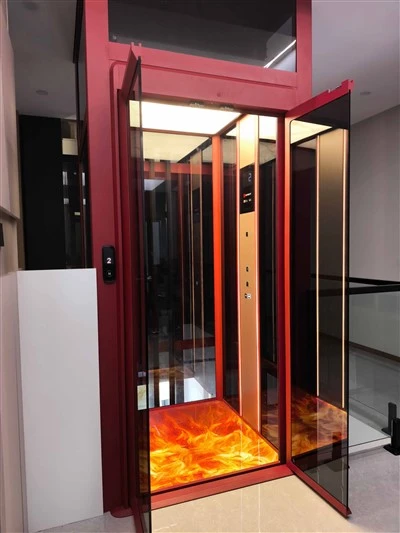
First, let’s define what a steel shaft elevator is, because that’s key to understanding its speed parameters. Unlike traditional elevators that use masonry or concrete shafts, steel shaft elevators have a prefabricated steel frame that forms the enclosure itself. This makes them faster to install, more durable in high-traffic or heavy-use environments, and adaptable for both new builds and retrofits. Because the steel shaft is rigid and can support higher loads, it opens up speed options that might not be feasible with older, weaker shaft designs. But speed isn’t just about how quick you want the ride—there are hard limits we have to respect, from building height to passenger comfort, and regulatory standards.
Let’s start with passenger steel shaft elevators, the most common type people encounter. For low-rise buildings—think two to five stories, like a small clinic, neighborhood grocery store, or boutique hotel—the speed range is typically 100 to 150 feet per minute (fpm). That’s about 1.1 to 1.7 miles per hour (mph). Why so slow? For short trips, there’s no need for extra speed, and slower elevators mean simpler, lower-cost installation. They’re also safer for mixed use: if the building has elderly occupants, children, or people with mobility aids, a slower speed gives passengers time to enter and exit without feeling rushed. We installed a set of low-rise steel shaft elevators for a pediatric clinic last year, and their 120 fpm speed was a perfect fit—no noisy starts or stops, and kids didn’t get scared by a fast, jerky ride.
As building height increases, speed has to go up to keep travel times reasonable. For mid-rise buildings, roughly six to 20 stories, passenger steel shaft elevators run between 150 and 500 fpm (1.7 to 5.7 mph). This is where steel shafts really shine. The prefabricated steel frame can handle the tension of longer cables and the dynamic forces of faster movement without warping or failing, which is a big concern with concrete shafts that can crack or shift over time in high-acceleration environments. A 10-story office building, for example, would be unworkable with a 120 fpm elevator; waiting two minutes to go from the lobby to the 10th floor would kill productivity. Our mid-rise units here have a sweet spot around 350 fpm for 12-story buildings—fast enough to cut travel time to 30 seconds, but slow enough that passengers don’t experience motion sickness, which is a common complaint at speeds above 500 fpm without proper damping systems.
For high-rise buildings—20 stories and up—passenger steel shaft elevators can go even faster, usually between 500 and 2,000 fpm (5.7 to 22.7 mph). That’s where you’ll find the fastest elevators in skyscrapers, like the ones in the Willis Tower in Chicago or the Petronas Towers in Kuala Lumpur. These units use advanced steel shaft designs: reinforced steel beams, precision-crafted cable systems, and magnetic levitation (maglev) technology in some cases to cut friction. Wait, maglev elevators still use steel shafts, right? Yes—they just don’t need cables; the steel shaft acts as a guide rail for the magnetic drive. For ultra-high-rise buildings over 50 stories, we can customize elevators up to 2,000 fpm, though we rarely go that fast unless the client has a specific need. Even here, there are limits: the tallest building in the world, the Burj Khalifa, has elevators that top out at 2,100 fpm, which is the current global record. For most high-rises we work with, speeds between 600 and 1,200 fpm are standard—fast enough to keep travel times under a minute for 30-story buildings, and comfortable for most passengers.
Now, freight steel shaft elevators are a whole different story, and their speed range is much lower. Freight elevators carry heavy loads—pallets, construction materials, vehicles, or industrial equipment—and their primary design focus is on load capacity, not speed. Most freight steel shaft elevators run between 50 and 200 fpm (0.57 to 2.3 mph), regardless of building height. Why so slow? First, stopping a heavy load takes more distance and force; a fast-moving freight elevator carrying a 10,000-pound pallet would have a much higher risk of damage or accident if it stops abruptly. Second, freight elevators are often used by workers who might be moving materials in and out, so slower speeds give them time to maneuver equipment into the car without rushing. We installed a freight steel shaft elevator for a retail warehouse last year, and its 100 fpm speed worked perfectly—they needed to move 2,000-pound pallets between the ground floor and the second level, and a faster speed would have been unnecessary and unsafe. There are exceptions: if a warehouse has multiple floors and high-volume shipments, we can build a custom freight elevator up to 300 fpm, but that’s rare. Even then, we add extra safety features like pressure-sensitive floor sensors and emergency stop buttons at every level to mitigate risk.
Industrial steel shaft elevators, used for things like manufacturing equipment, conveyor systems, or access to machinery platforms, have an even wider speed range, but they’re not measured in the same way as passenger elevators. Some small industrial lifts move as slow as 20 fpm, designed for precise positioning of small parts. Others, used for moving heavy industrial vehicles like forklifts, top out at 150 fpm, same as passenger low-rise units. The key here is that speed for industrial lifts is tailored to the task, not just building height. If a factory needs to move a 50,000-pound mold from a production line to a storage area, a slow speed ensures the mold stays stable during transport, whereas a faster speed would risk damaging the product or the elevator itself.
Now, let’s talk about the factors that go into choosing the right speed for a steel shaft elevator, because it’s not just about what’s fast. First and foremost is the speed-to-height ratio. For every story, you need a certain amount of travel, and calculating how fast the elevator can move without making passengers uncomfortable is critical. Studies show that the average person starts to feel motion sickness at speeds above 1,500 fpm, unless the elevator has advanced vibration damping systems that reduce the G-forces during acceleration and deceleration. That’s why even in ultra-high-rise skyscrapers, most elevators don’t go above 2,000 fpm—beyond that, the engineering cost to reduce motion sickness becomes too high for most clients.
Another factor is building regulations and safety codes. In the U.S., the American Society of Mechanical Engineers (ASME) has strict standards for elevator speed, especially for passenger elevators. For example, elevators over 250 fpm need to have buffer systems at the bottom of the shaft to stop the elevator if it overtravels, which is easier to integrate with a steel shaft than a concrete one. Steel shafts are modular, so we can pre-install these buffers during manufacturing, cutting down on installation time and making them more reliable than retrofitting into a concrete shaft. International codes vary, but as a supplier, we adhere to all local safety standards, so you never have to worry about an elevator that’s too fast for regulations.
Then there’s the type of traffic the elevator will see. High-traffic elevators in office buildings need higher speeds to move large numbers of people during rush hour. For example, a 20-story office building might have two 400 fpm elevators, which can move 20 people each, total 80 people per trip, cutting wait times during rush hour. A low-traffic warehouse elevator, on the other hand, can be slow because it only needs to move a few pallets a day. We always do a traffic analysis for every project before recommending a speed—if the client skips that step, we adjust, because a too-fast elevator for low-traffic use is a waste of money, and a too-slow elevator for high-traffic use will lead to complaints and lost productivity.
Steel shaft design also plays a role in speed. Our steel shafts are precision-cut to within 1/8 of an inch of tolerance, which means the guide rails for the elevator car are perfectly aligned. That reduces friction, so the elevator can move faster without wearing out parts or making noise. If the shaft is misaligned, even a moderate speed can cause the car to shake, which is uncomfortable for passengers and increases wear on cables and motors. That’s one of the biggest advantages of steel shaft elevators over traditional shafts—their modular construction ensures consistent alignment, so we can design for higher speeds without sacrificing ride quality.
I want to address a common misconception here: faster elevators aren’t always better. I’ve had clients come to us asking for the fastest possible elevator, thinking it’s a status symbol, only to realize that their small 5-story building doesn’t need it. A 500 fpm elevator for a 5-story building would cost 30% more to install and run, with no noticeable benefit—travel time would be 10 seconds faster than a 150 fpm elevator, which no one would even notice. The best speed is always the one that meets the client’s specific needs: travel time, building height, load, and budget. That’s why we don’t just sell off-the-shelf units; we customize every steel shaft elevator to fit the project.
Let’s also talk about maintenance, because speed affects that too. Faster elevators have more moving parts that wear out faster—cables, motors, guide rails, and control systems. A 1,000 fpm elevator will need cable replacements every 10 years, compared to 15 years for a 300 fpm elevator. The tradeoff is that faster elevators have lower travel times, so if you have a high-rise, it’s worth the extra maintenance. For low-rise buildings, slower elevators mean lower long-term maintenance costs, which is a big selling point for many clients. We always present the full lifecycle cost—initial purchase, installation, and ongoing maintenance—when recommending a speed, so clients can make an informed decision.
So to wrap up, the speed range of a steel shaft elevator isn’t a single number—it’s a spectrum tailored to what the elevator is used for. For passenger elevators, it’s 100 to 2,000 fpm, depending on if it’s low, mid, or high-rise. For freight elevators, it’s 50 to 300 fpm, focused on load capacity over speed. For industrial lifts, it’s even more flexible, ranging from 20 to 300 fpm based on the task. As a steel shaft elevator supplier, our job is to work with you to figure out what speed makes sense for your building, your traffic, and your budget. We don’t just sell equipment; we design and build steel shaft elevators that fit your needs, not a one-size-fits-all solution.

If you’re planning a new build, a retrofit, or just have questions about which steel shaft elevator speed is right for your project, I’d love to talk. We’ve worked on everything from small low-rise retail elevators to ultra-high-rise skyscraper units, and we can help you find the perfect fit. Reach out to our team to start a conversation about your project, and we’ll walk you through every step, from design to installation.
Large Shaft Gantry Frame Panoramic Elevator References
ASME A17.1-2020, Safety Standard for Elevators and Escalators
Elevator Technology: Design, Operation, and Maintenance, 3rd Edition, Elsevier
"High-Speed Elevators: Challenges and Solutions," Journal of Elevator Engineering, 2022
Steel Structure Design for Elevator Shafts, International Code Council, 2021
Zhejiang Homeway Elevator Co., Ltd.
Zhejiang Homeway Elevator Co., Ltd. is one of the most professional steel shaft elevator manufacturers and suppliers in China. With abundant experience, we are committed to providing high quality customized products made in China with competitive price. If you’re going to buy CE approved steel shaft elevator, welcome to get quotation from our factory.
Address: No.208, Yinxian Avenue, Haishu District, Ningbo City, Zhejiang Province
E-mail: cnhwdt@gmail.com
WebSite: https://www.homewayelevator.com/
