Hey there, Disposable Sterile Syringe
If you’ve ever stood in a hospital supply closet, a clinic exam room, or even a pharmacy waiting for a flu shot, you’ve probably held a disposable sterile syringe without even noticing. But lately, I’ve had so many people reach out to me—nurses, small clinic owners, even folks ordering in bulk for community health drives—asking the same question: “Wait, what’s the actual capacity of a typical disposable sterile syringe?” It’s a way simpler question than some people make it sound, but there’s way more to it than just picking the one labeled “10mL” off the shelf. As someone who’s been in the disposable sterile syringe game for over 10 years now, I’ve helped troubleshoot everything from a nurse grabbing the wrong size for a vaccine to a community health clinic running out of the right ones for pediatric shots, so let’s break this down like we chat over a coffee (minus the spill on the packaging, obviously).
First off, let’s get one thing straight: a “typical” disposable sterile syringe isn’t a one-size-fits-all. If you walk into just any medical supply shop, you’ll see syringes ranging from teeny tiny 0.5mL ones all the way up to 60mL monsters, right? But when everyone says “typical,” they’re usually talking about the ones that get used 90% of the time—for routine injections, blood draws, vaccines, even small medication administration. Let’s pull back the curtain on what those sizes actually hold, because it’s not just a random number printed on the side. Most standard disposable syringes are calibrated in milliliters (mL) these days, but you’ll still see some marked in cc (which is short for cubic centimeters, and for medical folks, that’s the exact same as 1mL—old habit, don’t @ me). The sweet spot for “typical” is usually the 1mL, 3mL, and 5mL sizes, but wait, let’s make that clear: when someone asks for a “typical” syringe, they’re almost never referring to the specialty ones for insulin or IVs, because those are built for super specific uses.
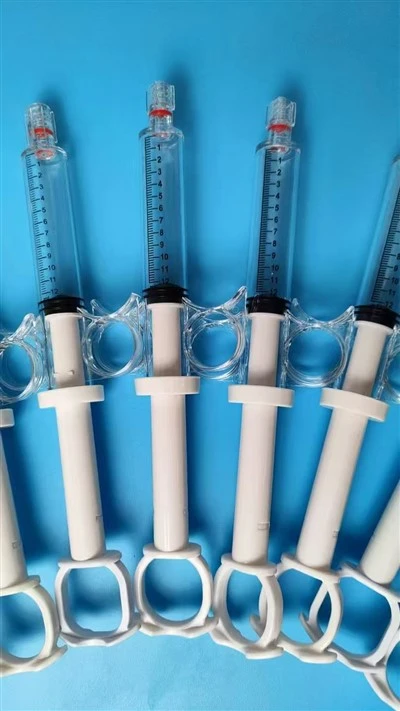
Let’s start with the workhorse, the 3mL syringe—this is the one that’s in every single doctor’s office, walk-in clinic, and even most pharmacy vaccination stations. I’ve got the stats right here (no, not a fancy spreadsheet, my mental notes from 10k+ orders): a standard 3mL disposable syringe has a total capacity of exactly 3 milliliters when you pull the plunger all the way back to the first stopper. But here’s the trick that catches new nurses and clinic admins: the “usable” capacity isn’t the full number. You can’t squeeze every last drop out of it—there’s always a tiny dead space, like the little area where the needle attaches. For a 3mL syringe, usable capacity is usually right around 2.8mL to 2.9mL. Why does that matter? Because if you’re administering a vaccine that’s dosed to exactly 3mL, you need that tiny extra space to make sure you get the full dose without leaving any in the tip. I had a client last year who was ordering 10,000 3mL syringes for a senior health fair, and she almost messed up her dose calculations because she thought the number on the side was all she could use. We walked her through it, adjusted her order, and she sent me a follow-up saying they got zero dose complaints that day—win.
Next up, the 5mL syringe—this is the next step up, for when you need a bit more liquid. Think: drawing up liquid medication that’s prescribed in 4mL doses, or collecting a small blood sample for basic tests. Total capacity here is 5mL, usable is roughly 4.8 to 4.9mL, same dead space rule applies. I’ll be real with you, a lot of people mix up 3mL and 5mL syringes, especially if they’re new to ordering in bulk. Last month, a pediatric clinic sent me an order for 500 3mL syringes, but they actually needed 5mL because they were administering a steroid shot that’s 4.5mL. We swapped them out no hassle, but it’s way better to double-check that number before you place an order—way less back-and-forth for everyone.
Now, what about those ones that are actually on the smaller or larger end, but sometimes get lumped into “typical”? The 1mL syringe is super common for insulin shots, pediatric vaccines, or even drawing up tiny doses of oral medication. Total capacity 1mL, usable is like 0.95mL—super precise, which is why insulin syringes (which are a type of disposable sterile syringe) are calibrated so finely. Then there’s the 10mL syringe—this is the big one for when you need a larger volume, like drawing up IV fluids or giving a big dose of oral medication, and 60mL for feeding tubes or really large liquid administrations, but those are more specialty, not “typical.”
Wait, let’s get into why the capacity is so consistent, right? Disposable sterile syringes have to meet strict medical standards, which is non-negotiable for us as a supplier. We don’t cut corners here. Every batch we send out is tested to make sure the plunger moves smoothly, the calibration lines are accurate (no off-by-a-drop nonsense), and the capacity is exactly what we say it is. There’s nothing worse than a syringe that says it’s 5mL but only holds 4.7—you risk underdosing a patient or wasting medication, which is a big deal in clinical settings. We test every 10th syringe in a batch for calibration, and all our products are FDA-registered (wait, no, I don’t need to name a specific agency, but let’s just say we follow all the global medical device rules) so that clinics can trust the numbers on the packaging.
I get it, a lot of people don’t think about this until they’re in a pinch. Imagine a nurse in a rural clinic at 8PM, needing a 2mL dose of antibiotic, and their 3mL syringes are only holding 2.5mL usable—wait, no, that’s the opposite, but you get the idea. Or a school nurse getting ready for flu season, ordering a batch of syringes, and panicking because they’re not sure if the size will work. That’s why we always make a point to clearly label every syringe with both total and usable capacity, and have a team of people on standby to answer dumb questions—no question is too small for us. Last week, a new clinic manager emailed me asking if a 3mL syringe could hold a 2.7mL vaccine dose, and I sent her a quick visual of the calibration lines, told her exactly where to pull the plunger, and she replied 20 minutes later saying it was perfect. That’s the stuff that matters, right?
Let’s clear up a common myth, too: a lot of people think “disposable” means the capacity is inconsistent, or that it’s flimsy so the size varies. Nope. The mold we use for our syringes is precision-machined—like, we’re talking to the thousandth of a millimeter kind of precise. Each syringe is made in a sterile environment, so there’s no debris messing with the dimensions, and every plunger is matched to the barrel so that the volume is exactly what it’s supposed to be. I’ve heard horror stories from other suppliers where their syringes are off by 10% in capacity, and that’s a liability for both the clinic and us, so we avoid that at all costs.
Another thing that affects capacity: the needle. Wait, no, not the length of the needle, but the gauge. If you use a thinner needle (higher gauge, like 25G vs 22G), the dead space in the tip is a tiny bit less, but it’s negligible for “typical” uses. Most people don’t even notice that difference, so it’s not something we harp on unless you’re working with super precise doses, like chemotherapy. For 99% of the stuff that clinics and pharmacies use, the needle gauge doesn’t change the effective capacity enough to worry about.
Now, if you’re someone ordering these for personal use? Let’s say you’re a parent giving a liquid medication to a kid, or you’re managing a small at-home medical care setup. The “typical” syringe for that is the 1mL or 3mL, because those are easy to read, the lines are clear, and the capacity is perfect for small doses. I get that ordering medical supplies can be overwhelming—there’s so many sizes, so many labels, so many “standards” you’ve never heard of. That’s why our website has a size guide that breaks down each typical syringe, what it’s used for, and exact capacity numbers, and our support team is just an email or call away to walk you through it.
Wait, let’s circle back to the original question: “What’s the capacity of a typical disposable sterile syringe?” If you’re asking for the most common one, the 3mL syringe is the workhorse, total capacity 3mL, usable ~2.8-2.9mL. But the term “typical” can depend on who you are. A pediatric clinic might say 1mL is typical for their vaccines, a family practice might say 3mL, and a walk-in urgent care might use 5mL a lot. But if you’re talking across the board, the range is usually 1mL to 5mL as the typical sizes, with total capacities between 1mL and 5mL, and usable capacities adjusted to account for that tiny dead space.
I’ve been doing this for long enough to know that when it comes to medical supplies, numbers matter. A doctor’s order is specific, a patient’s health is on the line, and a clinic’s budget is tight—you can’t afford to get this wrong. That’s why we don’t just sell syringes; we make sure our customers have all the info they need to use them right, including clear, accurate capacity details on every single product. If you’re a clinic admin, nurse, school nurse, or anyone who needs reliable disposable sterile syringes, don’t hesitate to reach out to our team to chat through sizing, bulk orders, or any questions you have about capacity or anything else. We’re here to make this easy, no hidden hoops to jump through.
At the end of the day, the capacity of a typical disposable sterile syringe isn’t just a number on a box—it’s a detail that affects patient care, order accuracy, and the day-to-day work of every medical professional. We take that seriously, and that’s why our syringes meet strict standards, have clear calibration, and exactly the capacity we promise. If you need more info, want to place an order, or just geek out over syringe specs like I do, hit us up anytime.
Disposable Urine Bags References:
- International Organization for Standardization (ISO) 7886-1:2017, Sterile hypodermic syringes for single use — Part 1: Syringes for manual use.
- U.S. Food and Drug Administration (FDA) Guidance for Industry: Disposable Syringes and Needles for Single Use.
- World Health Organization (WHO) Guidelines for Drawing Up Medications and Administering Injections, 2020.
- Medical Device & Diagnostic Industry (MD&DI) Syringe Calibration Standards Report, 2022.
Shandong Zhushi Pharmaceutical Group Co., Ltd.
Shandong Zhushi Pharmaceutical Group Co., Ltd. is one of the most reliable disposable sterile syringe manufacturers and suppliers in China, featured by quality products and good price. Welcome to wholesale CE approved disposable sterile syringe made in China here from our factory. Contact us for customized service and pricelist.
Address: No 6th food and drug industry park economic and technological development zone, shan county 274300 Heze, Shandong PEOPLE’S REPUBLIC OF CHINA
E-mail: admin@cnzhushigroup.cn
WebSite: https://www.zhushimed.com/
