If you’re in the market for a plastic spiral corrugated pipe machine, chances are you’re not just shopping for a piece of equipment—you’re investing in a tool that’ll shape your production output, cut down on downtime, and ultimately boost your bottom line. As someone who’s been supplying these machines for years, I’ve seen way too many buyers jump in blind, only to end up with a unit that can’t keep up with their orders, breaks down every other week, or costs way more to run than they anticipated. So let’s break down the real stuff—no fluff, no sales pitches, just what actually matters when picking the right machine for your business. Plastic Spiral Corrugated Pipe Machine
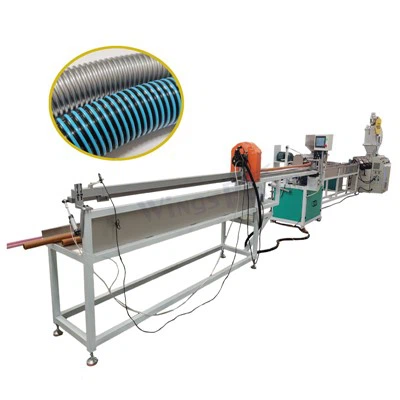
First off, let’s start with what you’re actually producing. Plastic spiral corrugated pipes aren’t one-size-fits-all. They range from tiny ones (think 10mm) used for cable insulation, all the way up to big 1m+ pipes for drainage, irrigation, or even sewer systems. If you’re buying a machine that only makes 20mm pipes, but your clients are asking for 50mm, you’re gonna have a bad time. I once had a customer who skipped this step—they bought a mid-range machine for small telecommunications pipes, then lost a huge order for agricultural drainage pipes because they couldn’t adjust the diameter. Now, not all machines list their full diameter range clearly, so don’t just look at the advertised max. Ask the supplier: “What’s the minimum and maximum pipe diameter I can make with this, and do I need extra parts to switch between sizes?” Some machines come with quick-change dies, which are a lifesaver, while others require hours of reconfiguration and cost extra parts. That’s a big detail most buyers sleep on.
Next, material flexibility. Most people assume these machines only work with polyethylene (PE) or polypropylene (PP)—the two big ones for spiral corrugated pipes. But what if you get orders for PVC, or even recycled plastic? Recycled materials are huge right now, especially with so many companies pushing sustainability. A lot of budget machines can’t handle recycled plastic because it’s often more inconsistent in thickness and quality. If you’re planning to use recycled material (or even if you might someday), make sure the machine’s extruder barrel and screw are built for that. Higher-grade barrels are usually made from nitrided steel, which is more durable and can handle the wear from recycled plastic. Cheap machines often use regular steel, which will warp or wear out fast. Trust me, replacing an extruder barrel halfway through a production run is not a fun day.
Then there’s production speed. Speed matters, but not the way you might think. A machine that boasts “100 meters per minute” sounds awesome, but only if you’re making small, thin pipes. For thicker, larger pipes, that speed will drop off a lot. And here’s the catch: faster speed isn’t always better if it messes up the corrugation. If the machine runs too fast, the spiral weld might be weak, or the corrugations might be uneven, which makes the pipe useless. Ask the supplier for real, in-use speed numbers for the pipe sizes you actually make. Any supplier worth their salt will have case studies or customer feedback that shows how fast the machine runs for specific products, not just a generic “max speed” that only works with a tiny test pipe. Also, factor in downtime for changes—if switching between diameters takes 2 hours, even a fast machine will end up being slow overall.
Now, let’s talk about durability and build quality. You don’t want a machine that breaks down after 6 months of use. The parts that take the most abuse are the spiral forming unit, the cutting system, and the extruder. Spiral forming units are the heart of the machine—they shape the flat plastic strip into the corrugated spiral. Cheap units often use cast aluminum, which bends easily. Look for ones made from cast iron or steel; they’re heavier, but they hold their shape way longer. The cutting system is another big one—you’ll need to cut the finished pipe to length. A dull or poorly aligned cutter will leave ragged edges, which can cause leaks or issues during installation. Some machines use fixed cutters, while others have automatic adjustable ones. Automatic is better if you make different pipe lengths for different clients. Also, check the motor size. A 5kW motor might seem enough, but if you’re running it all day long for big pipes, it’ll overheat and burn out. Motors with higher thermal overload protection are a must for continuous use.
Energy efficiency is something a lot of buyers overlook, but it’ll add up big time over a year. Extrusion machines use a ton of electricity to heat the plastic, so a machine that’s more energy-efficient can save you thousands annually. Look for machines with servo motors instead of regular AC motors—they’re more precise and use less energy, especially when running at lower speeds. Also, check if the heating system has temperature control zones. If you can adjust the heat in different parts of the extruder, you won’t waste energy heating areas that don’t need it. I’ve had customers who bought cheap machines that used way more electricity, and a year later, they were paying $15k extra per month in utility costs—way more than they saved on the initial purchase price. That’s a mistake you don’t want to make.
Support and after-sales service are non-negotiable. No matter how good the machine is, something will go wrong eventually. If your supplier is across the world, and they take 2 weeks to ship a replacement part, you could lose a huge order. Ask about what kind of support they offer: do they have on-site technicians? Or do they do remote troubleshooting? Are spare parts easy to get, or do you have to wait weeks for them? A lot of budget suppliers skimp on after-sales, which leaves you stuck when your machine breaks down. I always tell buyers: choose a supplier that has local support or can ship parts within 3-5 days. Also, make sure they offer training—even if you’ve used these machines before, every model is a little different, and bad training can lead to mistakes that ruin pipes.
Budget-wise, I get it—you don’t want to overspend. But here’s the thing: a $10k machine will cost you way more in the long run than a $15k machine that’s better built and faster. Don’t just look at the upfront price. Calculate the total cost of ownership: energy costs, maintenance, downtime, and replacement parts. A slightly more expensive machine that runs 24/7 without issues will pay for itself in a year, while a cheap one will have you repairing it nonstop. Also, avoid hidden costs. Some suppliers advertise a low price, then charge extra for dies, quick-change parts, or even installation. Get a clear quote that includes everything you need to start producing pipes.
Wait, let’s not forget about scalability. If your business is growing, you don’t want to have to buy a whole new machine in a year. Look for a machine that can be upgraded—maybe you can add a larger extruder later, or adjust it to make bigger pipes. A lot of mid-range machines have modular parts, so you can expand without starting over. I had a customer who bought a basic machine for small pipes, then 2 years later, added a larger forming unit to make bigger pipes. That saved them $50k instead of buying a new machine.
Now, let’s run through a quick checklist to make sure you don’t miss anything:
- Confirm your target pipe diameters and check the machine’s actual range (not just advertised).
- Make sure it works with the plastic materials you’ll use, including recycled if needed.
- Get real production speed numbers for your pipe sizes, not generic max speed.
- Check the build quality of the forming unit, cutter, and motor.
- Ask about energy efficiency features like servo motors and zone heating.
- Verify after-sales support, spare parts availability, and training.
- Calculate total cost of ownership, not just upfront price.
- Look for scalability if you plan to grow your business.
I’ve seen so many buyers skip over one of these points and regret it. For example, a construction company that bought a machine for 100mm pipes, then had to fulfill a 600mm drainage order—they had to rent a machine and lost money on the job. Another one, a small manufacturer, bought a machine that didn’t handle recycled plastic, so they couldn’t take a big contract with a company that required 30% recycled material. It’s the little details that make or break this decision.

At the end of the day, your plastic spiral corrugated pipe machine is the backbone of your production. Pick one that fits your current needs, leaves room to grow, and has the support you can count on, and you’ll be set up for success for years. If you’re not sure where to start, or you have specific questions about what machine would work for your pipe sizes and materials, feel free to reach out. We’re here to help you find the right fit, not just sell you a machine.
PVC Pipe Machine Reference
- Plastics Technology. (2022). "Selection Criteria for Extrusion Machinery for Corrugated Pipe Production." Society of Plastics Engineers.
- European Plastic Converters Association. (2023). "Guidelines for Sustainable Plastic Pipe Manufacturing Equipment." EUROPAP.
- Machinery Lubrication Magazine. (2021). "Reducing Downtime in Extrusion Equipment: Best Practices for Corrugated Pipe Lines." Industrial Publishing.
Qingdao Wings Plastic Technology Co., Ltd.
As one of the most experienced plastic spiral corrugated pipe machine manufacturers and suppliers in China, we also support customized service. Please feel free to buy durable plastic spiral corrugated pipe machine made in China here from our factory. For price consultation, contact us.
Address: C02 Of Anshengyi Road, No.2 Fuan Industry Zone,Jiaodong Town, Jiaozhou City, Qingdao City, Shandong Province,China
E-mail: kelly@wingsplastic.com
WebSite: https://www.wingsextruder.com/
