If you’ve ever owned a reverse osmosis (RO) water system—whether under your sink, a whole-home setup, or the point-of-use countertop model—you’ve probably paused mid-filter change and wondered, “How much is this going to set me back each year?” As a RO water system supplier with over 12 years in the game, I’ve answered this question hundreds of times, and the short answer is: it’s not a one-size-fits-all number. But I can break it down, realistically, so you’re not caught off guard by hidden costs or oversimplified estimates. Let’s get into the nitty-gritty, no sales fluff, just the facts I share with every customer who walks through my door. RO Water System
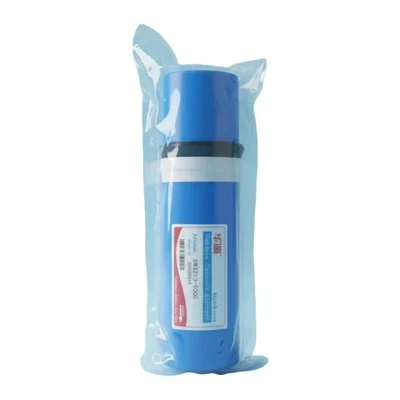
First, let’s clear up a common misconception: RO filters aren’t a single part. Most standard residential RO systems use a three-stage or four-stage filter stack, and each stage serves a different purpose. The pre-filters (usually a sediment filter and a carbon filter) do the heavy lifting of removing large particles, chlorine, and VOCs that would clog or damage the more expensive RO membrane. The membrane is the heart of the system, pulling out 95-99% of contaminants like lead, arsenic, and nitrates. And then there’s the post-carbon filter, which polishes the water to remove any leftover taste or odor, making it crisp enough to drink straight. Each of these has its own lifespan, so annual costs depend on how many of these parts you replace in a year—not just one big, expensive filter.
Let’s start with residential systems, since that’s what most of my customers use. The average home’s annual RO filter replacement cost ranges from $80 to $350, with the sweet spot for most households sitting around $150 to $200. But why such a wide gap? It all boils down to three factors: your water source, your system’s size, and the quality of filters you choose.
Your water source is the biggest variable. If you’re on city water, it’s relatively soft, low in minerals, and has consistent chlorine levels, so your pre-filters won’t wear out as fast. A sediment filter for city water might last 6 to 12 months, and a carbon filter the same. But if you’re on well water, that’s a whole different story. Well water often has high sediment, iron, manganese, or even sand that clogs pre-filters in 3 to 6 months. I had a customer last year on a private well in rural Ohio who went through three sediment filters in a single year, compared to a nearby city water customer who only changed theirs once. That’s a $40 difference right there—just from the water coming out of your tap.
System size matters too. Point-of-use (POU) systems, the small under-sink units that make 50 gallons of water a day, are the most common and have the lowest annual costs. Their pre-filters are cheap, usually $10 to $15 each, and the RO membrane is $40 to $60, lasting 2 to 5 years. For a POU system, that’s $70 to $110 per year if you replace pre-filters every 6 months and the membrane every 3 years. Then there’s whole-home RO systems, which are designed to supply every faucet, shower, and dishwasher in your house. These have larger pre-filters and a bigger membrane, so parts are more expensive—sediment filters might be $20 each, carbon filters $30, and the membrane $120 to $180, lasting 3 to 4 years. Whole-home systems also have higher water flow, so they process more contaminants faster, meaning you might replace pre-filters every 4 months instead of 6. That bumps their annual cost up to $180 to $350.
The quality of filters you pick also plays a huge role in the final number. It’s tempting to grab the cheap off-brand filters at the big-box store to save a few bucks, but in the long run, that can cost you more. Generic sediment filters are often made with thinner pleats, so they get clogged faster—meaning you’re buying them twice as often. Cheap carbon filters might not be dense enough to remove chlorine or VOCs effectively, which means they let those contaminants reach the RO membrane, shortening its lifespan. I’ve had customers who tried $5 off-brand pre-filters, only to have their RO membrane fail after 18 months instead of 3 years. A good RO membrane can cost $60 vs. a cheap one at $30, but the good one lasts twice as long—so you’re actually saving money in the long run. That said, you don’t have to splurge on premium filters either. Mid-range, NSF-certified filters (the ones tested to remove the contaminants they claim) strike the best balance between cost and performance, usually $15 to $25 per pre-filter and $50 to $80 for an RO membrane.
Wait, what about commercial or light industrial systems? I get calls from small cafes, office buildings, and gyms too, and their costs are way different. For a 10-gallon-per-minute commercial system, annual filter replacement runs $500 to $1,200. These systems process hundreds of gallons a day, so pre-filters might last 2 to 3 months, and the RO membrane lasts 1 to 2 years. It’s not just the volume—commercial systems also serve more people, so you have to replace filters more frequently to keep up with demand and maintain water quality for staff or customers.
Now, let’s talk about hidden costs that many people don’t account for. First, labor: if you’re not handy with plumbing, you might pay a professional $50 to $100 per filter change. That adds $100 to $300 a year if you have three pre-filter changes and one membrane change annually. But a lot of my customers change their own filters now—most systems have a “twist-and-lock” design, so it takes 10 minutes, no tools needed. I always show first-time customers how to do it during installation, so they can avoid labor fees. Another hidden cost is wasted water? Wait, no—wait, no, that’s not a filter cost, but the membrane lifespan is affected by flushing. RO systems waste about 3 gallons of water for every 1 gallon they produce, but if you don’t flush the membrane regularly (as recommended), it can scale up or get clogged, leading to premature replacement. So following manufacturer guidelines isn’t just about water quality—it’s about avoiding extra filter costs.
Let’s put this all into real numbers with examples, straight from my customer database. Take Sarah, a customer in Chicago on city water, with a standard 50-gallon POU RO system. She changes her sediment and carbon pre-filters every 6 months, and her membrane every 3 years. Her annual cost: (2 pre-filters x $12 each) + (2 carbon filters x $15 each) + (1 membrane / 3 years x $50) = $24 + $30 + ~$17 = $71 a year. That’s on the lower end, thanks to good city water and doing it herself. Then there’s Mark, in rural Iowa on well water, with a whole-home RO system. He changes sediment filters every 4 months, carbon every 6, and his membrane every 4 years. His annual cost: (3 sediment filters x $20) + (2 carbon filters x $30) + (1 membrane / 4 x $150) = $60 + $60 + $37.50 = $157.50 a year. Another customer, Lisa, owns a small coffee shop in Dallas. Her commercial RO system uses 3 sediment filters a year, 2 carbon filters, and a membrane every 18 months. Her annual cost: (3 x $25) + (2 x $40) + (1 membrane / 1.5 x $200) = $75 + $80 + ~$133 = $288 a year. That’s a middle-range commercial cost, no crazy numbers.
Now, what about ways to reduce your annual filter costs? I always share these with customers when they ask: first, test your water annually. A simple well water test costs $50 to $100, and it can tell you exactly what contaminants you’re dealing with, so you don’t over-filter. For example, if your water only has high sediment, you don’t need a premium carbon filter—just a good sediment filter. Second, invest in a pre-filter housing with a larger capacity. A bigger sediment filter might cost $25 instead of $15, but it lasts twice as long, so you save money over a year. Third, stick to NSF-certified filters, not off-brand ones. I’ve seen too many customers buy cheap filters that end up ruining their RO membrane, which costs $150 to replace—way more than the extra $10 they would have spent on a good filter. And finally, change your filters on schedule, not when they feel “clogged.” Waiting until your water pressure drops or tastes off can let contaminants build up, which damages the membrane and leads to early replacement.
Wait, a lot of people ask: is it cheaper to replace the whole system instead of filters? That’s a trick question. A standard residential RO system costs $200 to $500, so replacing it every 5 years would be $40 to $100 a year, but that doesn’t include installation costs. Installation for a POU system is $100 to $200, so adding that in, you’re looking at $60 to $140 a year—close to filter costs, but you have to invest a big lump sum upfront. Also, newer systems might be more efficient, so they waste less water, but filter costs are still the ongoing expense. For most people, replacing filters is way more cost-effective than buying a whole new system every few years.
I should also mention that some systems include a filter subscription, which can simplify things. I offer a subscription service where customers get filters shipped to their door right when they need to change them, with discounts for signing up. That’s a big hit with busy people who forget to order filters. The subscription usually shaves 10-15% off filter costs, so a POU customer might pay $120 a year instead of $150, and a whole-home customer might pay $180 instead of $220. It’s not necessary, but it’s a convenient way to stay on schedule and save a little.

Let’s address a common fear: “Will cheap filters make my water unsafe?” That’s a valid concern. Off-brand filters that aren’t tested can let contaminants like lead or chlorine pass through, which defeats the purpose of an RO system. I always advise customers to look for the NSF mark, which means the filter was tested to meet EPA standards for removing specific contaminants. As a supplier, I only carry filters that are NSF-certified, because cutting corners on filter quality is a disservice to customers who are relying on their RO system for safe drinking water.
Seawater Desalination RO System So to wrap this up, the annual cost of replacing RO filters is anywhere from $70 for a small, city-water POU system up to $1,200 for a large commercial whole-home system. The average residential cost is $150 to $200, which is a small price to pay for safe, great-tasting drinking water—way cheaper than buying bottled water, which costs an average of $400 a year per person. If you’re still unsure what your exact annual cost would be, or you need help picking the right filters for your system and water source, feel free to reach out to discuss your needs and pricing details.
References
- Water Quality Association. (2022). Reverse Osmosis System Filter Lifespan and Replacement Guidelines.
- EPA. (2021). Home Water Treatment Technologies: Reverse Osmosis.
- NSF International. (2023). Standard 58 for Reverse Osmosis Systems.
- U.S. Department of Energy. (2022). Water Efficiency in Residential Appliances: Reverse Osmosis Systems.
Huamo Group
Fujian Huamo Technology Co., Ltd. is one of the most professional ro water system manufacturers and suppliers in China, featured by quality products and good service. Please rest assured to wholesale the best ro water system made in China here and get price list from our factory. Contact us for custom service and OEM service.
Address: No.6 Hengtong Rd, Shanmei Village, Xiamei Town, Nanan City, Fujian Province, China
E-mail: info@huaromembrane.com
WebSite: https://www.hmromembrane.com/
