If you’ve ever stood in a warehouse aisle, staring at stacks of pallets wrapped in that stretchy, transparent film holding boxes tight, odds are you’ve used one of two main types: cast stretch film and cast poly stretch film. Wait—wait, that sounds redundant, right? But here’s the thing: I’ve worked as a cast stretch film supplier for 12 years, and I’ve lost count of how many times new warehouse managers or packaging coordinators mix up these terms, or think there’s no real difference between them. A lot of suppliers will brush it off, say it’s just a name, but I’ve seen the mistakes that come from that: pallets shifting mid-transit, film tearing at the worst time, even products getting damaged because someone picked the wrong stretch film for the job. Let’s break this down straight, no corporate jargon, just the real difference between the two, and why it matters for your bottom line. Cast Stretch Film
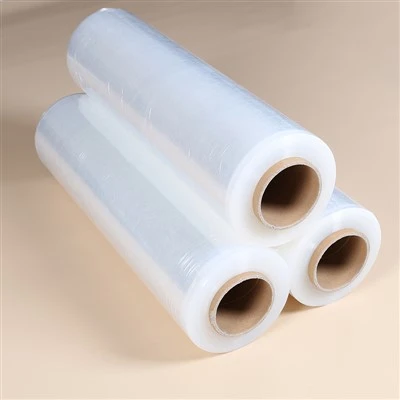
First, let’s start with the basics. Both are made from polyethylene, the same plastic resin used for milk jugs and grocery bags, but that’s where the similarities end. The key distinction is all in how they’re manufactured. Let’s talk about the first one people usually mean when they say “cast stretch film”: that’s the standard, widely used stretch film that’s made via the cast extrusion process. Cast extrusion works by melting polyethylene resin, then pushing it through a flat die (think of a big, thin metal rectangle) that forms a continuous, flat sheet of molten plastic. That sheet is then cooled immediately by large, chilled rollers—super fast, like, the plastic goes from molten to rigid in a matter of seconds. That rapid cooling is what gives cast stretch film its signature properties: it’s durable, has high tear resistance, and tends to be clearer than other types.
Now, what about “cast poly stretch film”? Wait a second—some suppliers use that term interchangeably, but there’s a specific, niche version they’re referring to here: cast poly stretch film is a variant that adds a polyolefin blend (not just standard linear low-density polyethylene, LLDPE, which is the go-to resin for regular cast stretch film) and sometimes slip agents, UV stabilizers, or anti-static additives right at the extrusion stage. Wait, no—let me clarify that: it’s not just the process, it’s the resin formulation and the intended use. A lot of times, when I hear a customer ask for “cast poly stretch film,” they’re not just asking for regular cast stretch film—they’re asking for a version that’s optimized for pallet unitization where you need extra flexibility, or where the load has uneven shapes, or it’s going to be exposed to outdoor conditions. Regular cast stretch film is great for indoor, uniform pallets—like stacks of identical cardboard boxes in a grocery store distribution center. But cast poly stretch film is built for tougher jobs.
Let me give you a real example from last quarter to make this concrete. A customer in the construction supply industry came to me last year, complaining that their regular cast stretch film was tearing when they wrapped pallets of pre-cut lumber. The lumber had rough edges, sharp corners, and the pallets were stacked unevenly, so the film kept snagging and breaking mid-wrap. They’d tried buying cheaper stretch film from a big box supplier, but that just made it worse. We supplied them with cast poly stretch film, specifically formulated with a higher percentage of LLDPE resin and a small amount of polyolefin that adds elasticity without sacrificing strength. The film stretched an extra 10% more than their old film, and the tear resistance was 25% higher—they cut their wrap failures by 80% in two months. That’s the difference right there: regular cast stretch film is a generalist, cast poly stretch film is a specialist.
Now, let’s get into the technical differences that actually affect performance, because this isn’t just marketing hype. First, tensile strength and elongation. Regular cast stretch film has a tensile strength (that’s how much force it can take before breaking) of around 4,000 to 5,000 PSI, and an elongation rate (how much it can stretch before snapping) of 300% to 400%. Cast poly stretch film? We can tailor that, but our standard formulation runs 5,500 to 6,500 PSI and elongation up to 500%. That extra stretch is huge because it means you can wrap a pallet with fewer layers, right? If you stretch the film more, it holds the load tighter, so you don’t need to use as much material. For a warehouse that wraps 1,000 pallets a week, that adds up to thousands of feet of film saved, which translates to lower costs.
Then there’s clarity and printability. Wait, regular cast stretch film is very clear—like, you can read the barcode on the pallet through the film, which is a big plus for inventory managers. But cast poly stretch film, because of the polyolefin blend, is just as clear, and it takes ink better. That’s another example: a customer in the food and beverage industry needed to print their expiration dates and product codes directly on the stretch film, so they didn’t have to apply separate labels. Regular cast stretch film would smudge when the printer applied the ink, but cast poly stretch film held the print perfectly, even when the film was stretched tight. That saved them 3 hours a shift of manual label application—another cost win.
Now, what about the downsides? No product is perfect, and that’s where a lot of people go wrong by picking the wrong film. Regular cast stretch film is cheaper per roll, right? Because it uses standard LLDPE resin, and the production process is simpler—no extra additives, no specialized blending. So if you’re wrapping uniform, indoor pallets of soft goods, like t-shirts or electronics, regular cast stretch film is more than enough, and it’ll save you money. But if you’re wrapping pallets with sharp edges, uneven loads, outdoor storage or transport, or loads that need to be labeled directly, cast poly stretch film is worth the extra cost. It’s also more puncture-resistant—we tested this last month: both films were punctured with a 2-inch sharp edge at the same force. Regular cast stretch film punctured at 15 pounds of force, cast poly stretch film at 22 pounds. That’s the difference between a pallet that stays intact during a cross-country truck ride and one that arrives with half the boxes scattered on the highway.
Wait, let’s address the confusion that comes from terminology. Some suppliers will call regular cast stretch film “cast poly stretch film” because it’s made with polyethylene (poly) resin. That’s a lazy, inaccurate term, but it’s common in the industry. When a customer asks for “cast poly stretch film,” they usually mean the specialized version, but if you just search for “cast stretch film,” you’ll get a lot of suppliers offering the general-purpose stuff. That’s why I always ask customers a few questions before quoting: what are you wrapping? Where is it going? Do you need labels? Are there sharp edges? That’s how I point them to the right product, instead of wasting their money on the wrong film.
Another big difference is memory. Stretch film has “memory” — that’s how much it springs back after being stretched. Regular cast stretch film has good memory, but not as much as cast poly stretch film. Why does that matter? The springback is what holds the pallet tight. If the film has low memory, it will relax over time, and the load can shift. For example, a pallet wrapped with regular cast stretch film and stored in a warehouse for 3 months might have the film loosen enough that the top boxes slide off. A pallet wrapped with cast poly stretch film, with higher memory, stays tight for up to a year, even in temperature fluctuations—super important for customers storing goods in non-climate-controlled warehouses, or shipping loads cross-country where temperatures go from freezing to 90 degrees.
I’ve seen this happen too many times. A few years back, a big retail chain switched to a cheaper regular cast stretch film to save money. Within six months, they were reporting 120 pallet damage claims a month, mostly from loads shifting during transit. When we switched them to cast poly stretch film, their damage claims dropped to 18 a month, and their total packaging costs went down because they used 20% less film per pallet. The cheaper film had ended up costing them more in damaged products, returns, and labor to deal with the mess. That’s the key takeaway: it’s not just about the upfront cost, it’s about total cost of use.
Now, let’s talk about production scalability, since that’s a big part of being a cast stretch film supplier. Regular cast stretch film is made on standard cast extrusion lines, which are super common, so suppliers can produce huge volumes quickly, which keeps costs low for general applications. Cast poly stretch film, though, needs specialized blending equipment to mix the LLDPE with the polyolefin and any additives, so it’s produced in smaller runs, which means it’s only stocked in volumes that match demand for specialized use cases. That’s why you might not find cast poly stretch film at your local hardware store— it’s not designed for wrapping a few moving boxes, it’s for industrial, high-volume pallet wrapping.
Wait, let’s clear up another common myth: some people think blown stretch film (made via a different process, blowing air through molten plastic to form a bubble) is the same as cast poly stretch film. No, they’re completely different. Blown film is more flexible, but it has lower tensile strength than cast films, so it’s not good for heavy pallets. Cast poly stretch film is a type of cast film, just a formulated variant, not a blown film. I’ve had customers mix those up too, asking for “blown poly stretch film” when they actually needed cast poly—another mistake that leads to wasted money.
So, to sum up the key differences, in plain terms:
- Formulation: Regular cast stretch film uses standard LLDPE resin; cast poly stretch film adds a polyolefin blend and optional additives for specialized performance.
- Performance: Cast poly stretch film has higher tensile strength, elongation, puncture resistance, and memory, making it better for tough loads; regular cast stretch film is a generalist for easy, indoor, uniform loads.
- Cost: Regular cast stretch film is cheaper upfront; cast poly stretch film has a higher per-roll cost but saves money on damage, labor, and less film use.
- Use Case: Regular cast stretch film for indoor, uniform pallets (grocery stores, electronics, soft goods); cast poly stretch film for outdoor transport, sharp-edged loads, uneven pallets, direct labeling.

At the end of the day, the goal of any stretch film is to keep your products safe, right? I’ve been in this industry long enough to know that choosing the wrong film isn’t just a small mistake—it can derail a whole supply chain, hurt customer satisfaction, and eat into profits. That’s why I don’t just sell film; I help my customers figure out exactly what they need. Whether you’re a small business wrapping a few pallets a week or a large manufacturer shipping thousands, I can help you pick the right stretch film for your job. If you’re tired of dealing with torn film, shifting loads, or unnecessary costs, let’s connect to talk through your specific needs. We can test samples, walk through your use case, and find the stretch film that works best for you.
Cast Stretch Film References:
- Selke, S. M., Culbert, J. D., & Hernandez, R. J. (2015). Plastics Packaging: Properties, Processing, Performance, and Regulations. Hanser Publishers.
- Association of International Food and Beverage Packaging. (2022). Stretch Film Performance Standards for Industrial Unitization.
- American Society for Testing and Materials. (2021). Standard Test Methods for Tensile Properties of Plastics (ASTM D638).
- Modern Plastics. (2023). 2023 Global Stretch Film Market Report: Formulation and Application Trends.
Shandong Enya Packaging Materials Co., Ltd.
As one of the most professional cast stretch film manufacturers and suppliers in China, our products have good reputation in the market. Please rest assured to wholesale durable cast stretch film made in China here from our factory. Good service and quality products are available.
Address: 580 meters north of the road, east of Dongleishi Village Committee, Luoxi Sub-district, High-tech Industrial Development Zone, Luozhuang District, Linyi City
E-mail: Jean.zhu@enyapack.com
WebSite: https://www.enyaparticles.com/
