Hey there! If you’ve landed on this blog, chances are you’re scratching your head about what size reverse osmosis (RO) water system you need. Well, you’re in the right place. I’m a supplier of RO water systems, and I’ve seen it all when it comes to folks trying to figure out the perfect fit for their needs. Reverse Osmosis Water System
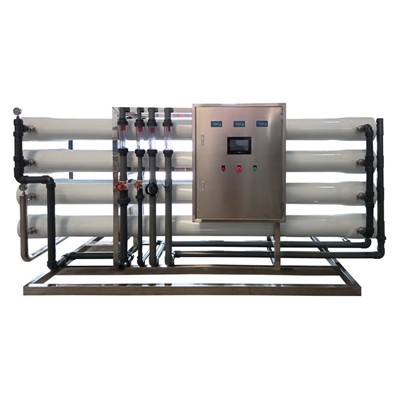
Let’s start with the basics. What the heck is a reverse osmosis water system anyway? It’s a water purification method that uses a semi – permeable membrane to remove ions, molecules, and larger particles from drinking water. In simple terms, it makes your water cleaner and safer to drink.
Now, the size of the RO system you need depends on a bunch of factors. The first and most obvious one is how much water you use. Think about your daily water consumption. Are you a single person living in a small apartment, or do you have a big family in a large house?
If you’re living alone, you might not need a huge system. A small – scale RO system with a production capacity of around 50 – 100 gallons per day (GPD) could be more than enough. It’ll easily handle your drinking water needs, making a few glasses of water for yourself, maybe some for cooking, and that’s about it.
But if you’ve got a family of four or more, things change. You’re looking at people taking showers, doing laundry, washing dishes, and of course, drinking water. In this case, you’re probably going to want a system with a capacity of 200 – 500 GPD. This will ensure that there’s always enough clean water to go around, even during peak usage times.
Another thing to consider is what you’re using the water for. If you’re just using it for drinking and cooking, a smaller system can work. But if you’re using it for other purposes like filling up a swimming pool or a large fish tank, you’ll need a much larger system. For example, if you’ve got a small backyard pool that needs to be refilled every now and then, a 500 – 1000 GPD system might be more appropriate.
The water quality in your area also plays a big role. If you live in an area where the water is really hard or has a high level of contaminants like chlorine, sediment, or heavy metals, you might need a more powerful system. A system with a higher capacity and better filtration capabilities can handle the purification process more effectively.
For instance, if your water has a lot of sediment, you’ll need a pre – filter in addition to the main RO membrane. And if the water is super high in chlorine, you might need a carbon filter to remove it before it reaches the RO membrane. These additional filtration steps can affect the overall size and capacity of the system you need.
Let’s talk about the space you have available. RO systems come in different sizes and shapes. Some are small and can be installed under the sink, while others are larger and need to be placed in a utility room or a basement. If you’ve got limited space under your sink, you’ll need to look for a compact system. But if you’ve got a big area in your basement, you have more options.
A small under – sink system is great for those with limited space. It’s easy to install and doesn’t take up much room. But it usually has a lower capacity compared to larger systems. On the other hand, a larger system might be more powerful and have a higher capacity, but it requires more space and can be a bit more challenging to install.
Now, let’s touch on the budget. The size of the RO system you choose will also depend on how much you’re willing to spend. Generally, smaller systems are less expensive than larger ones. A basic 50 – 100 GPD system can cost anywhere from $150 to $300. But if you’re looking at a high – capacity 500 – 1000 GPD system, you’re looking at a price tag of $500 to $1500 or more.
It’s important to remember that while a larger system might cost more upfront, it could save you money in the long run. If it can handle all your water needs and last for a long time, it’ll be a better investment.
Oh, and don’t forget about maintenance. Larger systems might require more maintenance, but they also tend to have a longer lifespan. You’ll need to replace the filters regularly, which can be a bit of a hassle. But if you choose a system with easy – to – replace filters, it won’t be too bad.
So, to sum it up, when you’re trying to figure out what size RO water system you need, think about your daily water usage, what you’re using the water for, the water quality in your area, the space you have available, your budget, and the maintenance requirements.
If you’re still not sure what size system is right for you, don’t worry! That’s what I’m here for. As a supplier of RO water systems, I’ve got the knowledge and experience to help you make the best decision. Whether you need a small system for a single – person household or a large system for a commercial property, I can guide you through the process.
If you’re interested in learning more or starting the process of choosing the right RO water system for you, don’t hesitate to reach out. I’d be more than happy to have a chat with you, answer your questions, and get you on the path to clean, safe drinking water. Just hit me up, and let’s start the discussion.
Reverse Osmosis Water System References
- "Water Treatment Basics" by the American Water Works Association
- "Reverse Osmosis Systems: A Comprehensive Guide" from a leading water purification industry publication
Shandong Yanuo Environmental Protection Equipment Co., Ltd.
We’re well-known as one of the leading reverse osmosis water system manufacturers and suppliers in China, featured by quality products and good price. Please rest assured to buy bulk reverse osmosis water system made in China here from our factory. Customized orders are welcome.
Address: North Side of the Road, 1,000 Meters West of the Intersection of Fenghuangshan West Road and Provincial Highway S102, Wangfu Subdistrict, Qingzhou City, Weifang City, Shandong Province.
E-mail: ynhb.499973983@gmail.com
WebSite: https://www.zkyaruo.com/
