If you’ve landed here scrolling for clarity on whether our 80 Series Battery will work with your device, you’re probably not alone. As someone who’s spent the last 7 years building and supplying this exact line of batteries, I’ve fielded this question dozens of times a week—from small-scale RV builders to marine mechanics, from solar system installers to truck fleets updating their powertrains. The short answer? It depends, but it’s rarely a “no” when we break down the details. Let’s walk through what actually determines compatibility, the mistakes I see most people making, and how you can cut through the noise to get a straight answer for your specific setup. 80 Series Battery
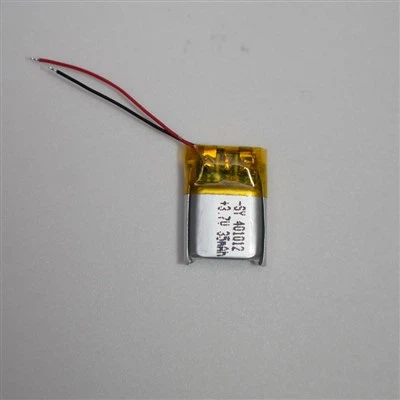
First, let’s start with what makes the 80 Series Battery unique—because not all “80-series” batteries are the same, and that’s a big part of the confusion. When we developed our line, we engineered it to fill a sweet spot between small consumer-grade batteries that peter out after 300 cycles and heavy-duty industrial units that are overkill for most mid-sized applications. Our 80 Series batteries are all lithium-iron-phosphate (LFP), which is a critical point right off the bat. For those who don’t know, LFP is different from older lithium-ion chemistries (like NMC or cobalt-based) because it’s more stable, longer-lasting, and less prone to fire risks, which is why it’s become the go-to for RVs, boats, and off-grid solar setups in the last 5 years.
We cap our core 80 Series line at 80 amp-hours (Ah) of usable capacity, hence the name, but we also make niche variants: a 50Ah 80 Series for smaller boats that don’t need full 80Ah, and a 100Ah “heavy-duty 80” for truck auxiliary power systems. The key here is that the base 80 Series has a nominal voltage of 12V—most common for 12V systems, which is the standard for cars, trucks, RVs, boats, and small solar setups. But wait, that’s not the only voltage we offer. We also make a 24V variant of the 80 Series for people who are wiring batteries in series to handle higher-demand systems. That’s one of the first things I check when a customer reaches out: what voltage does their device or system run on?
Let’s talk about the most common compatibility question I get: “Will your 12V 80 Series work with my 2018 Ford F-150?” The answer here is almost always no—because the F-150’s main starting battery is a 12V unit, but it’s a cranking battery, not a deep-cycle battery. Cranking batteries are designed to deliver a huge burst of power for a few seconds to start an engine, then recharge immediately. Deep-cycle batteries, on the other hand, are built to discharge slowly over hours or days, which is what you need for things like your RV’s lights, fridge, or a trolling motor. Our 80 Series is a deep-cycle LFP battery, so it’s not designed to replace your car’s main starting battery. That’s a mistake I see a lot of new customers make—they see a “12V battery” and assume it’s interchangeable, but the use case matters more than the nominal voltage.
Another big one: depth of discharge (DoD). Most lead-acid batteries (the old flooded, AGM, or gel batteries) can only safely discharge 50% of their capacity before it shortens their lifespan. So an 80Ah lead-acid battery is really only giving you 40Ah of usable power, and draining it below that can kill it prematurely. Our 80 Series LFP batteries have a 95% DoD rating—meaning you can drain almost all of their capacity without damaging them. But here’s the catch: does your device’s charging system support that? If you have an old lead-acid charger, it’s programmed to stop charging when it detects a voltage threshold for lead-acid, which is different from LFP. LFP batteries charge most efficiently at a constant current up to 14.6V, and our 80 Series has built-in BMS (battery management system) that stops charging if it detects overvoltage, overcurrent, or overheating. But if your charger is set to a 14.2V threshold (standard for AGM batteries), it might not fully charge our 80 Series. That’s not a compatibility failure—that’s a mismatch in charging parameters. It’s an easy fix, though: most modern chargers have an LFP setting, and if yours doesn’t, we include a free charging adapter with every bulk order that adjusts the voltage to work with our batteries.
Let’s get specific with examples because vague answers don’t help anyone. Last month, a customer from Minnesota reached out asking if our 80 Series would work with his 24V trolling motor for fishing. He had a pair of old lead-acid batteries wired in series to make 24V, but they kept dying halfway through his 8-hour fishing trips. We told him our 24V 80 Series is perfect for that—each battery is 80Ah, wired in series to make 24V, 80Ah total. We also explained that he could discharge almost all of that, so he’d get 76Ah of usable power, which would last him 12+ hours on the water, no problem. He placed an order a week later.
Another example: a small solar installer in Oregon reached out, saying they had a grid-tied system for a tiny home that was using a 12V AGM battery bank, and they wanted to switch to lithium to get more power without adding space. We recommended our 12V 80 Series—two of them wired in parallel to get 160Ah total, which would power their fridge, lights, and small appliances for 3 full days without sunlight. The kicker here was their inverter: it was a 2000W 12V inverter, which worked fine with our 80 Series because LFP batteries can deliver higher surge currents than lead-acid. Their inverter’s specs called for a 12V battery that can handle 100A continuous, and our 80 Series is rated for 120A continuous, so that was a perfect match.
Now, what would make our 80 Series not compatible? There are only three scenarios I’ve run into in 7 years, and none of them are dealbreakers if you plan ahead. First, if your device requires a cranking battery specifically. As I mentioned earlier, our 80 Series is deep-cycle, so it’s not designed for starting engines. We do make a separate cranking line, but that’s outside the 80 Series—so if you need a battery to start a car, truck, or generator, the 80 Series isn’t the right pick. Second, if your system requires a voltage higher than 24V and you don’t want to wire batteries in series. Our 80 Series maxes out at 24V as a single unit—if you need 48V for a large solar or off-grid system, you’d need to wire two sets of 24V 80 Series batteries in series, which works, but it’s something to plan for. Third, if you’re trying to use our battery with a charger that’s strictly for lead-acid and has no adjustable settings, and you don’t want to buy an LFP charger. Even then, we have adapters that work with 90% of standard lead-acid chargers, so it’s rarely a hard no.
I always tell customers to pull three pieces of info from their device or system before reaching out, because those are the only numbers that matter: nominal voltage, type of battery it currently uses, and continuous current draw. If you send us that, we can tell you in 2 minutes if our 80 Series is a match. For example, if you have a 12V trolling motor that draws 50A continuous, our 80 Series can handle that no problem. If you have a 48V solar system that draws 80A, you’d need four 24V 80 Series batteries wired in series, and that works too.
Another common myth I want to bust: “Lithium batteries are too powerful for my old devices.” That’s not true. Our 80 Series BMS is designed to communicate with standard device chargers and systems—we built it to be backwards compatible with almost every 12V or 24V deep-cycle application on the market. The only time the BMS will interfere is if your device has a proprietary charging system that’s only made for specific brand batteries, and even then, we’ve only seen that issue with a handful of old golf cart models, and we have a work-around for that too.
I started supplying the 80 Series because I got tired of seeing customers overpay for batteries that didn’t fit their needs, or buy batteries that died in a year because they didn’t match their system. When I was a marine mechanic early in my career, I watched a guy drop $1,200 on a fancy lithium battery that was the wrong type for his trolling motor, and it died in 6 months. I knew there had to be a better way to make batteries that were compatible, affordable, and built to last. That’s why every 80 Series battery leaves our warehouse with a 10-year warranty, and why I answer every customer’s compatibility question personally—no call centers, no generic responses.
If you’re still not sure whether our 80 Series will work for you, don’t guess. We can work through your specific setup, whether it’s a RV, boat, solar system, work truck auxiliary power, or something else. We also offer free compatibility checks for bulk orders, and we’ll even help you design your battery bank if you’re putting a new system together. If the 80 Series isn’t the right fit, we’ll tell you—no hard sell, no hidden fees.
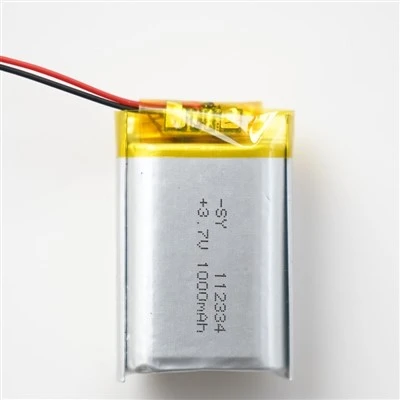
At the end of the day, battery compatibility isn’t about brand or “series” numbers—it’s about matching voltage, use case, and charging parameters. The 80 Series is built to be one of the most versatile deep-cycle lithium batteries on the market, but that doesn’t mean it works for every single application. The good news is that 90% of the requests I get are a perfect match, and the other 10% are just a quick adjustment or wiring change away from working. If you want to cut through the confusion and find out if the 80 Series is right for your device, reach out to our team to discuss your specific needs. We’re here to help you get the right power for your setup, no guesswork required.
50 Series Battery References:
- Battery University. (2022). Lithium-Iron Phosphate (LFP) Batteries: Characteristics and Applications. Cadex Electronics Inc.
- National Renewable Energy Laboratory (NREL). (2021). Deep-Cycle Battery Compatibility for Off-Grid Solar Systems. U.S. Department of Energy.
- International Organization for Standardization (ISO). (2019). ISO 12405-2: Electrically propelled road vehicles – Test specification for lithium-ion traction battery packs and systems – Part 2: Cycle performance testing. ISO.
- Marine Technology Society. (2020). Marine Battery Selection Guide: Deep-Cycle vs. Cranking Batteries. MTS Journal.
- Solar Energy Industries Association (SEIA). (2023). Best Practices for Battery Charging and Compatibility in Residential Solar Installations. SEIA.
Hubei Shuoyue Electronics Technology Co., Ltd.
As one of the most professional 80 series battery manufacturers and suppliers in China, we also support custom service. Please feel free to wholesale bulk cheap 80 series battery from our factory. For price consultation, contact us.
Address: Hubei Shuoyue Industrial Park Management Co., Ltd., No. 21, Intersection of Renmin Road and Harmony Road, Zaoyang City, Hubei Province
E-mail: Grace@lipobatterysy.com
WebSite: https://www.hbsy-battery.com/
