If you’ve ever stood in a utility yard on a sweltering summer afternoon, watching a transformer hum along while power lines sag under the weight of peak demand, you know those big metal boxes don’t work alone. They rely on an entire ecosystem of smaller, often overlooked parts—what we at our team call transformer accessories—to keep flowing, safe, and reliable. For years, I’ve spoken with grid operators, maintenance techs, and plant managers across North America, and one question comes up more than any other: how do you tell a good transformer accessory from one that will fail when you need it most? Transformer Accessories
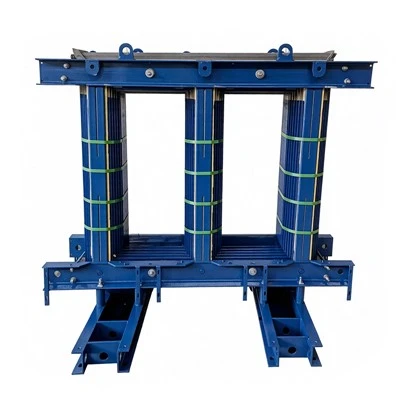
As a transformer accessories supplier, I see every day how a misstep in selecting these parts can snowball into costly outages, unplanned repairs, and even safety hazards. Last year, a rural utility client of ours called in a panic after a non-branded surge arrestor they’d sourced online failed during a summer thunderstorm. The surge fried their 15kV distribution transformer, knocking out power for 1,200 homes for 36 hours. That incident stuck with me, because it wasn’t just about a bad part—it was about ignoring the core features that make an accessory worth investing in.
So today, I want to break down the non-negotiable features of a good transformer accessory, from surge arrestors and bushings to conservators and pressure relief valves. These aren’t just random parts; each is engineered to do a specific job, and a well-made one will outlast cheap alternatives, reduce maintenance, and keep your grid running when it counts.
First and foremost, any good transformer accessory has to meet strict, relevant industry standards. This isn’t just a box-ticking exercise—it’s the baseline that separates parts built for grid use from parts slapped together for quick profit. For North American applications, that means compliance with standards from the Institute of Electrical and Electronics Engineers (IEEE), like IEEE C57 series standards for transformer components, or International Electrotechnical Commission (IEC) standards for global markets. Let’s take surge arrestors, for example. A surge arrestor that meets IEEE C62.11 isn’t just rated for the voltage of your transformer—it’s tested to withstand multiple surge events over its lifespan, has consistent non-linear resistance to divert excess voltage away from your transformer, and is built to prevent thermal runaway, a common cause of arrestor failure. I’ve seen unrated arrestors that fit the bolt pattern of a standard unit but can’t handle even a minor lightning strike; in one case, a set of these burned through the transformer’s secondary windings during a storm, costing the utility $80,000 in repairs. Standards also cover things like temperature cycling, corrosion resistance, and mechanical load capacity, so never buy a part that can’t prove it’s been tested to these benchmarks.
Next, build quality and material integrity. The materials used in an accessory don’t just affect how it looks—they directly impact its lifespan and performance, especially in harsh environments. Take transformer bushings, which are the insulated connectors that let power flow in and out of the transformer core. Bushings sit between the transformer’s oil-filled tank and the outdoor environment, so they’re exposed to UV radiation, extreme temperatures (from -40°F in northern Canada to 120°F in the desert Southwest), and moisture. A good bushing will use high-grade, cross-linked polyethylene (XLPE) or epoxy resin for the insulation, instead of cheaper PVC or polyester that breaks down over time from UV exposure. The metal flanges and terminals should be made of corrosion-resistant materials like tin-plated copper or stainless steel, not plain steel that will rust in coastal or humid areas. I once worked with a utility in Florida that replaced a batch of cheap bushings every two years because the steel terminals corroded and caused partial discharges; after switching to our XLPE-insulated, tin-plated copper bushings, they haven’t had a bushing failure in five years. Even small accessories, like gaskets for conservator tanks, matter here. A good gasket is made of EPDM rubber, which is resistant to transformer oil and temperature fluctuations, not neoprene that swells and leaks when exposed to oil. A leak in a conservator can let moisture into the transformer oil, leading to insulation breakdown and catastrophic failure.
Third, compatibility and design specificity for your transformer type and application. A lot of people assume a part that fits the physical dimensions of their transformer will work, but that’s not true. Transformers come in different ratings (distribution, power, instrument), different voltage classes, and different cooling methods (oil-filled, dry-type, cast resin), and each requires accessories engineered for its specific use case. For example, a pressure relief valve (PRV) for a 10MVA power transformer is not the same as a PRV for a 500kVA distribution transformer. The PRV’s opening pressure is calibrated to the maximum pressure the transformer’s tank can safely handle; set it too low, and it will open during normal load fluctuations, leaking oil and triggering false alarms; set it too high, and the tank can rupture during a fault. We had a customer a few years ago who installed a generic PRV on a 20MVA transformer, not realizing it was calibrated for a smaller unit. When a downstream fault caused a spike in internal pressure, the PRV didn’t open, and the tank cracked, spilling 2,000 gallons of transformer oil into a nearby wetland. That’s not just a financial hit—it’s an environmental one that leads to fines and public backlash. Compatibility also includes electrical characteristics: a surge arrestor rated for 15kV won’t work on a 25kV line, no matter how well it’s built. Always share your transformer’s nameplate data (kVA rating, voltage, cooling type) with your accessory supplier to make sure the part is designed for your exact setup.
Fourth, transparency in testing and traceability. A good transformer accessory supplier should be able to provide full documentation of every part, including test reports, manufacturing dates, and material certifications. In the world of critical infrastructure, traceability is non-negotiable. Think of it this way: if a part fails mid-service, you need to be able to track it back to its production batch, find out if there were any other parts from that batch with the same issue, and take action quickly. Cheap, unbranded parts almost never have this level of documentation. At our team, every accessory we ship comes with a test report that includes results for dielectric strength, mechanical load testing, and material analysis—all tied to a unique serial number for the part. We also track every batch through our manufacturing process, so if a customer calls us with a question about a part, we can pull up exactly when it was made, who worked on it, and what tests it passed. This level of transparency isn’t just good for our customers—it’s good for us, because it holds us accountable for every part we send out. I always tell clients: if a supplier can’t give you a test report that matches the serial number on the part, keep looking.
Fifth, after-sales support and accessibility. A transformer accessory isn’t just a one-time purchase—it’s a part that needs to be maintained, replaced, and supported over its lifespan, which can be 20 to 40 years. A good supplier won’t just take your order and disappear—they’ll be there to help with installation, troubleshooting, and replacement parts when you need them. For example, if a tech is on-site and notices a minor issue with a surge arrestor, a reputable supplier will offer on-call technical support to help diagnose the problem, or even send a replacement part overnight if it’s a critical outage event. We work with utilities of all sizes, from small rural co-ops to large national grid operators, and we keep a stock of common accessories in warehouses across North America to ensure we can ship parts within 24 hours for emergency repairs. We also offer installation guides, training sessions for maintenance teams, and extended warranties on most of our accessories—something you rarely get with cheap, unbranded parts that have no support network. I’ve had customers come to us after buying a cheap pressure relief valve from an online marketplace, and when that valve failed, the supplier was long gone, leaving them scrambling to find a replacement that would work with their transformer. That’s the last place you want to be when a storm is coming.
Now, let’s talk about what makes a good accessory for different types of transformers, because one size doesn’t fit all. For distribution transformers, which are the common units on power poles in residential neighborhoods, the key accessories are surge arrestors, pole mount brackets, and secondary bushings. For these, compact design, corrosion resistance, and compliance with ANSI standards are top priorities—they’re often in exposed, outdoor locations, so they need to stand up to weather without taking up too much space on a pole. For large power transformers used in substations, the critical accessories are conservators, oil filtration systems, PRVs, and bushing monitoring sensors. These parts need to be high-capacity, precision-calibrated, and often have digital monitoring capabilities to track things like oil moisture levels, partial discharges, and temperature in real time. Dry-type transformers, used in commercial buildings and indoor substations, need accessories like enclosure heaters and cooling fans that are rated for indoor, low-dust environments, and meet NFPA safety standards for indoor use.
I’ve spent 12 years in this industry, and the one thing I’ve learned is that cutting corners on transformer accessories is never a good deal. A $50 surge arrestor that fails during a storm costs you $50,000 in transformer repairs, outage fines, and customer complaints. A $200 bushing that rusts out in two years costs you more than a well-made $500 bushing over its 10-year lifespan. The best accessories are an investment, not an expense—they reduce unplanned downtime, lower maintenance costs, and keep your operations safe and reliable.
At our team, we don’t just sell parts—we partner with our customers to make sure they get the right accessories for their specific needs. We work closely with utility engineers, maintenance techs, and plant managers to review their transformer fleets, identify potential weak points, and recommend accessories that meet all the features we’ve talked about: industry standards, high-quality materials, compatibility, traceability, and strong after-sales support. Whether you’re a small co-op needing 10 replacement bushings or a national grid operator sourcing custom pressure relief valves for a new substation, we have the expertise and inventory to help.
If you’re looking to upgrade your transformer accessories, replace failed parts, or source components for a new project, we’re here to help. Our team of electrical engineers and technical specialists can walk you through product specs, test reports, and compatibility checks to make sure you get exactly what you need. Don’t wait for a small part to turn into a major outage—reach out to our team today to start a conversation about how we can support your transformer accessory needs.
Silicon Steel Coils and Sheets References
- IEEE. (2020). IEEE Std C57.12.00-2020: Standard Specification for Liquid-Immersed Distribution, Power, and Regulating Transformers.
- IEC. (2018). IEC 60076-1: Power Transformers – Part 1: General.
- National Fire Protection Association (NFPA). (2021). NFPA 70: National Electrical Code.
- North American Electric Reliability Corporation (NERC). (2022). Transformer and Associated Equipment Reliability Standards.
Wuxi Zhongpu Electric Co., Ltd.
As one of the most professional transformer accessories manufacturers and suppliers in China, we also support customized service. Please feel free to wholesale bulk high quality transformer accessories made in China here from our factory. Welcome to contact us for pricelist.
Address: No.52 Jiankang Road, Donggang Town, Xishan District, Wuxi City, Jiangsu Province
E-mail: 13585006135@163.com
WebSite: https://www.zhongpuelectric.com/
