As a switchgear supplier, I spend most of my days walking through manufacturing floors, talking to engineers, and answering the same question over and over: “What do those little gray boxes on switchgear actually do?” It’s a fair question—most people see switchgear as that big metal cabinet in a substation or a factory’s power room, and the relays inside get lost in all the wires and labels. But let me tell you, those relays are the backbone of the system. Without them, switchgear is just expensive metal with no way to protect what matters most: your equipment, your people, and your bottom line. Switchgear
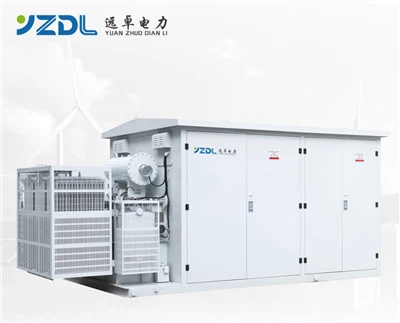
Let’s start with the basics. Switchgear is the collection of electrical components that control, protect, and isolate power in industrial, commercial, and utility settings. Relays are the intelligent control units inside that make all that work. Think of them as the nervous system of the power distribution network. When there’s a problem—like a short circuit, an overload, or a sudden spike in voltage—relays don’t just sit there. They act faster than the human eye can blink, triggering switchgear to disconnect the faulty part of the circuit before the damage spreads. I’ve seen what happens when relays fail to do their job: a factory line burns out, a substation goes dark, or worse, a worker gets hurt. That’s why we don’t cut corners on relays when we build our switchgear.
First, there’s the core function we all hear about: fault detection and isolation. Let’s break that down. Imagine a manufacturing plant with a 480V power feeder running to a production line. If a wire frays and touches the metal frame (a phase-to-ground fault), huge amounts of current will surge through that line. Left unaddressed, that surge will heat up the wiring, melt insulation, and could cause a fire. Relays monitor the current and voltage levels on every part of the circuit in real time. They’re programmed to know what’s “normal” for that specific line—how much current the production motor draws when it starts, how much it uses during steady operation. If the current jumps way above that normal range, the relay picks up on it in milliseconds. Then it sends a signal to the circuit breaker in the switchgear to open, cutting power only to the faulty feeder, not the entire plant. That isolation is key. We design our relays to be selective, so only the faulty section is shut down, minimizing downtime for our customers. Last year, we supplied a switchgear unit to a food processing plant, and a few months after installation, a conveyor belt’s motor burned out. The relay on that feeder detected the fault in 0.02 seconds, opened the breaker, and the rest of the plant kept running. The maintenance team only had to fix that one line, not the whole facility. That’s the power of a well-tuned relay.
Next, there’s overcurrent protection, which is probably the most common type of relay function. Overloads happen all the time—maybe a workshop adds a new piece of equipment that pushes a circuit too hard, or a motor gets jammed and draws extra current, or weather causes a line to sag and overheat. Relays that handle overcurrent protection are calibrated to trip at specific current thresholds. There are different types too: instantaneous overcurrent relays for fast, severe faults, and time-delay overcurrent relays for smaller overloads that need a bit of time to clear (like when a big motor starts up and draws high current briefly). We work closely with our customers to set these trip times and thresholds based on their exact equipment. A hospital has different needs than a mining operation—hospitals can’t afford even a few seconds of downtime for critical systems, so their relays are programmed for super-fast tripping. A warehouse with less critical lighting might have a slightly longer time delay to avoid unnecessary trips during startup. That customization is what makes our switchgear stand out.
Then there’s voltage protection, which is crucial for sensitive electronics. These days, almost every business relies on computers, PLCs (programmable logic controllers), and other high-tech equipment that can be damaged by overvoltage or undervoltage. Overvoltage can happen when a lightning strike hits a power line, or when a utility switches between power sources. Undervoltage might occur during a grid sag, or when a large load kicks on and drops the voltage temporarily. Either way, both events can fry circuit boards, corrupt data, or shut down entire control systems. Voltage relays in our switchgear monitor line voltage 24/7. If voltage goes above or below the safe range for the connected equipment, the relay triggers a trip. For example, a call center we worked with last year had a problem with voltage sags during peak hours. We installed under-voltage relays in their switchgear that sensed when voltage dropped below 90% of the rated level, and disconnected non-critical loads like break rooms and outdoor lighting temporarily to keep the data centers and call systems running. They didn’t lose a single call, and their servers stayed online. That’s the difference relays make for sensitive loads.
Another critical function is differential protection. This one is for larger components like transformers, generators, or busbars—parts that carry huge amounts of power and would be catastrophically damaged if a fault isn’t caught immediately. Differential relays work by comparing the current entering a component to the current leaving it. Under normal conditions, those two currents are equal. If there’s a fault inside the component, the currents will be different—some current is leaking to ground or shorting between phases. The differential relay detects that imbalance and trips the switchgear’s breaker in microseconds. I remember a power utility customer that had a 10MVA transformer fail a few years back. Their old switchgear didn’t have a differential relay, so when the transformer developed an internal fault, the overcurrent relays took too long to trip, and the transformer burned out completely, costing them over $200,000 in replacement and downtime. We retrofitted their switchgear with differential relays, and they haven’t had a similar issue since. Differential protection isn’t for every small load, but for critical, high-power equipment, it’s non-negotiable.
We can’t forget about ground fault protection either. Ground faults are the most common type of electrical fault, and they’re also the most dangerous because they pose a shock risk to people. A ground fault happens when a hot wire touches a grounded surface—like a metal conduit, a machine frame, or even a person. Relays with ground fault protection sense the small leakage current that flows from the hot wire to ground, even if it’s not enough to trigger overcurrent protection. For example, a frayed wire inside a tool could leak a small amount of current to the frame. If someone touches the tool, that current could go through their body and cause a serious shock. Ground fault relays in switchgear pick up on that leakage current and trip the breaker before the current reaches harmful levels. We always include ground fault protection in our switchgear for commercial and industrial facilities because worker safety is never something to cut corners on.
Beyond just tripping breakers, modern relays do a lot more. They have communication capabilities, so they can send real-time data to a customer’s SCADA (Supervisory Control and Data Acquisition) system. That means plant managers can check the status of every circuit, see if there’s any unusual current or voltage, and even troubleshoot problems without being on the substation floor. Some relays have self-diagnostic features that alert maintenance teams to potential issues before they cause a fault. A relay might send a warning that its internal components are aging, so a technician can replace it during a scheduled shutdown instead of dealing with an unplanned outage in the middle of the night. This is the “smart” side of relays that’s become more common in the last decade, and it’s a big reason our customers choose our switchgear—we integrate these smart relays so they get both protection and visibility into their power system.
I talk to a lot of customers who think relays are one-size-fits-all, but that’s far from the truth. Different applications need different relay types and settings. A mining operation has long feeder lines that can experience voltage drops, so their relays need to account for that. A data center has critical loads that require 100% uptime, so their relays have redundant communication and backup power. That’s why our team doesn’t just sell switchgear—we work with each customer to understand their specific needs, then select and program the right relays for their system. We test every relay before it leaves our facility to make sure it trips at the exact current and voltage levels we set. There’s no room for error here.
At the end of the day, the functions of protection relays in switchgear come down to three things: keeping equipment safe, keeping operations running, and keeping people safe. I’ve seen the damage that happens when relays fail, and I’ve seen the relief on a customer’s face when a relay works as designed and prevents a costly outage. That’s why we prioritize high-quality, reliable relays in every switchgear unit we build. If you’re in the market for new switchgear, or you’re looking to upgrade your existing system with better protection relays, we’re here to help. We don’t just sell products—we partner with our customers to make sure their power systems are safe, efficient, and reliable. Reach out to our team to discuss your needs, and we’ll walk you through the right solutions for your facility.
Switchgear REFERENCES
- IEEE Standard for Power System Protection, IEEE C37.2-2021
- Electrical Power Distribution Switchgear: Design, Application, and Construction, E. L. Nemer, CRC Press, 2019
- Protection Relays: Theory and Application, A. R. van Warrington, Springer, 2018
- Occupational Safety and Health Administration (OSHA), Electrical Safety-Related Work Practices, 29 CFR 1910.331-1910.335
Yuanzhuo Electrical Equipment (Jiangsu) Co., Ltd.
We’re well-known as one of the leading switchgear manufacturers and suppliers in China. We warmly welcome you to wholesale high quality switchgear at competitive price from our factory. If you have any enquiry about cooperation, please feel free to email us.
Address: Group 8, Chengdong Village, Fucheng Sub-district Office, Funing County
E-mail: markcheng1358@126.com
WebSite: https://www.yzdlchina.com/
