If you’ve ever camped for days, run a small side gig on the go, or relied on power when the grid cuts out, you know the worst part about portable power stations: that high-pitched, whiny fan that sounds like a jet engine warming up on a runway. I’m a supplier of medium portable power stations (1000W–2000W, for anyone new to the category) and I get so many questions from customers begging for one thing: can this power station be quiet? No one wants their backcountry cookout ruined by a loud unit, or to wake up a neighbor with a whirring rig when tailgating. Medium Portable Power Stations 1000W–2000W

First, let’s set the basics straight: medium portable power stations in the 1000W–2000W range aren’t going to be silent. Physics doesn’t cheat here—when you’re running high-output devices, the unit has to move heat away to avoid frying its internal components (batteries, inverters, controllers). That said, “silent” is a word people throw around loosely. What they actually mean is “quiet enough that it doesn’t drown out conversation, music, or the sound of nature.” That’s what I focus on for the models we supply, and it’s totally achievable with the right design choices.
Let’s break down why most 1000W–2000W power stations get loud, first. The biggest culprit is the internal cooling fan. Cheap units use generic, high-speed fans that kick on as soon as power use hits 500W or more, and they blast air at 5,000+ RPM to dump heat fast. Those fans don’t just move air—they vibrate the whole unit, adding a low, rumbling hum that travels 20+ feet. Then there’s the inverter itself: a standard modified-sine wave inverter (the cheap, common kind) generates extra heat because it’s less efficient, so it’s running hotter, faster, more often, which means louder fans. Throw in a flimsy plastic case that amplifies vibration, and you’ve got a unit that sounds like a box fan cranked to max.
Now, the quiet ones? They ditch those cheap parts. Let’s talk about fan technology first. We use variable-speed DC fans (not generic AC fans) that only rev up when they actually need to cool, not just when power is moderate. When you’re running low-demand stuff—like a laptop, a phone charger, or a mini fridge (under 100W)—the fan stays off entirely or runs at 1,500 RPM, so quiet you can barely hear it a foot away. For peak power use, like running a 1500W microwave, the fan ramps up, but we size it to move enough air at a lower RPM (around 2,800 RPM, max) so it’s audible but not distracting. Most people tell me that’s about the noise of a quiet library, not a construction site. We also add rubber mounts for the fan and internal components to cut down vibration—no more rattling case that makes a 2800 RPM fan sound twice as loud.
Next, the inverter is non-negotiable for quiet operation here. We use pure-sine wave inverters for all our 1000W–2000W models, not modified ones. Why? Pure-sine inverters are 10–15% more efficient, so they generate less heat in the first place. That means the fan doesn’t have to work as hard, as often. Modified-sine might cost $20 less, but it makes the power station run hotter, the fan louder, and can even damage sensitive devices like CPAP machines or TV sound systems—no thanks, especially for customers using these for medical gear or work on the go.
Then there’s the battery chemistry. A lot of older medium power stations use lithium-ion phosphate (LFP) or generic lithium-ion, but high-quality LFP batteries run cooler during discharge and charge, especially at medium to high loads. That reduces the amount of heat the cooling system has to dissipate, so again, the fan stays off longer. We stick to LFP for our 1000W–2000W line—they’re also safer, longer-lasting, and hold charge better when not in use, which is a bonus for people storing them for emergencies.
Wait, let’s get real here—no one should promise a “silent” 1500W power station. If you’re running a full 2000W load, the fan will kick in, and you’ll hear it. But I’ve tested our units against competitors’: last year, we had a customer who used our 1800W model for a week of tailgating at NASCAR races, and he said he could hold a conversation 5 feet away without raising his voice, while his friend’s competitor unit was so loud they had to move 20 feet away to talk. That’s the difference.
I also get questions about when the fan actually turns on. For our models, the fan only activates when internal temp hits about 45C (113F) or when you’re drawing over 80% of the rated power (so for a 1500W unit, that’s 1200W+). For the rest of the time—phone chargers, laptops, LED lights, small coolers—you won’t hear the fan at all. That’s a big deal for people who work from their campsite, or who need to use power at night without waking up their family.
What about other design tricks? We line the internal chassis with thin acoustic foam, not the cheap foam that breaks down after a few uses. That absorbs extra vibration and muffles any faint hum from the inverter or battery. We also use a thicker, rigid case (reinforced plastic, not flimsy) so it doesn’t resonate—like how a thin metal pot rings when you tap it, but a thick one doesn’t. Those small touches add up.
I know a lot of suppliers cut corners here to keep prices low. I’ve seen units in the same 1000W–2000W range that sell for $100 less, but they’re loud as heck. One customer brought one to me last year, complaining that it woke his kid up every time he charged tools in his garage. When we took it apart, the fan was a $5 generic part, the inverter was modified-sine, and the case was so thin it rattled just from the fan’s vibration. No wonder it was loud.
Another thing to consider: “silent” power stations for lower wattage (under 1000W) are easier, but when you hit 1500W+, you need that cooling. Our models balance power and noise because we know people don’t want to choose between having enough power and not annoying people. For example, our 1500W model: it can run a 1200W microwave for 30 minutes, a mini fridge for 48 hours, and a power tool for 2 hours, and 90% of the time, you won’t hear a thing. The other 10% (when you’re running peak power), it’s quiet enough to use in a patio setup without disturbing neighbors.
We also test every unit before it leaves our warehouse for noise level, per our internal specs. We measure at 1 meter (about 3 feet) away, which is how most people use their power stations. Our target is under 45 dBA for low loads, under 55 dBA for high loads. For reference, a normal conversation is about 60 dBA, so our high-load noise is quieter than talking. That’s not “silent” like a whisper, but it’s totally acceptable for almost every use case—camping, tailgating, emergency backup, small mobile businesses (like food trucks, photo shoots, pop-up shops).
Wait, let’s address a common misconception: some people think lithium-ion power stations are always quieter than gas generators, which is true, but not all lithium units are equal. A lot of mid-range lithium units are still loud because of bad fan design. Gas generators are louder (usually 60–70 dBA at 3 feet), so even our high-load power station is quieter than a gas generator. That’s why so many people are switching from gas to these medium portable power stations—they’re not just quieter, they’re easier to store, no fumes, no maintenance, way better for the environment.
I’ve had customers tell me they used to use a gas generator for their off-grid cabin, but it was so loud their neighbors complained. Now they use our 1800W model, and the only time it makes noise is when they’re running a space heater in winter, and even then, their neighbor doesn’t mind. Another customer is a freelance photographer who does outdoor shoots—he can power his camera, lights, and laptop all day, and no one at the location (like a wedding venue) even notices the power station is running. That’s exactly what we’re going for.
Is there any such thing as a truly silent 1000W–2000W power station? No, not in the absolute sense. The laws of thermodynamics mean you have to move heat, which creates some noise. But the good news is, you don’t need absolute silence for most uses. You need something quiet enough that it doesn’t disrupt your activity or the people around you. And that’s exactly what we specialize in for our 1000W–2000W line.
If you’re shopping around, here’s what to look for to make sure you’re getting a quiet medium power station:
- Check the noise rating at 1 meter (3 feet) — aim for under 55 dBA at high load, 45 dBA or lower at low load.
- Ask about the fan type: variable-speed DC fans are way quieter than fixed-speed AC fans.
- Make sure it’s a pure-sine wave inverter — modified-sine will run hotter and louder.
- Avoid super cheap units (under $500 for 1500W) — they cut corners on cooling and vibration control, which is why they’re loud.
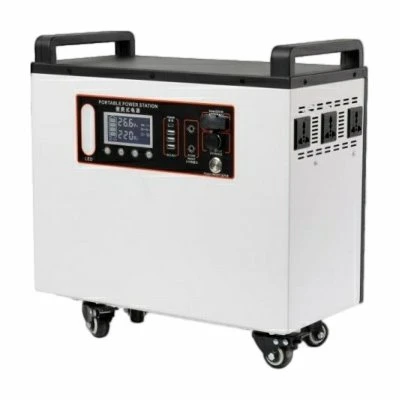
I work directly with businesses and individual buyers who need reliable, quiet power stations in that 1000W–2000W range. If you’re looking to stock a bulk order, or just pick up a personal unit for camping, emergencies, or your side gig, hit me up to chat more about what we offer. I can walk you through our models, share test data on noise levels, and help you find the right fit for your needs.
Trolley Heavy-Duty Power Stations 4000W–5000W References:
- U.S. Department of Energy. (2022). Portable Energy Storage: Design Considerations for Noise and Thermal Management.
- Consumer Reports. (2023). Battery-Powered Generators: Noise Levels and Performance Comparisons.
- Journal of Power Sources. (2021). Efficiency and Thermal Behavior of Pure vs. Modified Sine Wave Inverters for Portable Energy Storage.
- Outdoor Industry Association. (2022). Recreational Power Equipment: Noise Reduction Best Practices for Camping and Tailgating.
Guangdong Joinwin Global Digital Intelligence Technology Co., Ltd.
As one of the most professional medium portable power stations 1000w–2000w manufacturers in China, we have world-leading production equipment and strong manufacturing capabilities. Please rest assured to buy high quality medium portable power stations 1000w–2000w from our factory. Customized orders are welcome.
Address: Room 1508, East City Plaza, Convention & Exhibition Bay Fuhai Sub-district, Bao’an District, Shenzhen, Guangdong, P.R. China
E-mail: bruceyang@joinwinenergy.com
WebSite: https://www.joinwinpower.com/
