If you’ve ever walked past a public plaza with that sleek, muted gray water feature that feels both earthy and modern, chances are you’ve come across a basalt rock fountain. As a supplier who’s spent years sourcing, shaping, and tweaking these fountains for everything from tiny courtyard nooks to sprawling resort grounds, I can tell you this isn’t just some random slab of stone with a pump—it’s a whole world of designs, each tailored for different spaces, vibes, and budgets. A lot of people hear “basalt rock” and picture the same old big, bulky cylinder, but trust me, there’s way more variety here. Today, let’s break down the most common (and coolest) designs I work with, straight from the shop floor. Basalt Rock Fountain
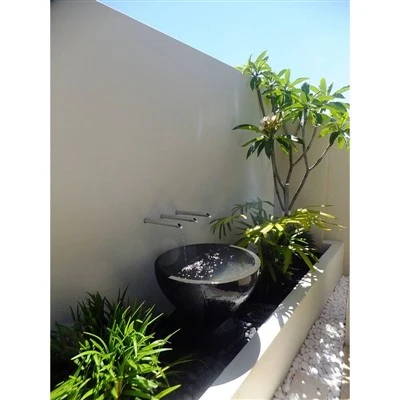
First up, the one that’s been around forever and still flies off shelves: the Single Cylinder Basalt Fountain. This is the classic, no-fuss design that got me hooked on basalt back when I first started in the industry. It’s literally a single chunk of dense, fine-grained basalt, usually cut into a straight cylinder (or sometimes a short, squat column, depending on the size). The key here is the drilled hole at the top—we run the pump line through it, and the water spills over the edges in a thin, gentle sheet, like a little curtain of gray. I remember when I installed one for a small café in Portland a few years back; the owner was nervous it’d be too plain, but now regulars bring their laptops and sit right by it. It’s versatile, too. You can get these in sizes from 12 inches tall for a patio table to 4 feet high for a front yard focal point. The best part? It’s low maintenance—no weird cracks to worry about, just a quick scrub of the cylinder once a month to keep the water flowing smooth. The only downside? It’s not great if you want multiple streams or super dynamic movement, but that’s where the other designs come in.
Next, the Multi-Tier Basalt Fountain. This is the design I recommend for anyone who wants that “wow” factor without going over the top. Think three (or sometimes four) stacked basalt slabs, each smaller than the one below, like a modern take on a tiered cake—if the cake was made of black volcanic rock. Each tier has its own drilled channel, so the water flows from the top, down each layer, and spills into a reservoir at the base. I’ve built these with both straight, uniform tiers and slightly uneven, natural-looking ones—some clients love the crisp, geometric stacked look, others prefer a more organic, weathered feel. A big project I worked on last year was a multi-tier fountain for a boutique hotel rooftop in Miami; we used weathered basalt to match the coastal vibe, and guests kept saying it felt like a little piece of the Pacific high up in the sky. These are a bit heavier to install than single cylinders, but the payoff is way more visual. Also, they’re quieter than you’d think—most of the sound is the gentle gurgle of water moving between tiers, not the loud splashing you get with some smaller fountains.
If you’re looking for something that feels totally natural, not like a man-made fixture, go for the Natural Stone Basalt Fountain (sometimes called the “River Rock” design, though technically it’s basalt boulders, not just river rock). This one uses unpolished, irregular basalt boulders—we pick them up from quarries where they’ve been tumbled by natural erosion, so they have that smooth, rounded, slightly bumpy look. The design here is all about asymmetry: we arrange the boulders in a loose cluster, drilling small holes in a few of them so water trickles out in thin streams or bubbles up a bit, instead of a solid sheet. I did a residential backyard fountain like this for a family in Colorado, and they told me it blends in so well that birds will land on the boulders to drink. The trick with these is picking boulders that have a mix of sizes—big ones as anchors, smaller ones tucked in between—to make it look like it’s always been there, not just set up a week ago. It’s also super customizable; if a client wants a specific shape or a boulder with a flat top, we can drill it to hold a small stream of water. Just note that these need a bit more care than the cylinder ones—you have to make sure no leaves or dirt get stuck in the small holes, because that stops the water flow.
Then there’s the Modular Basalt Fountain, which is the go-to for anyone who needs something that fits a specific space, whether it’s a tight apartment balcony or a wide corporate lobby. This design uses individual basalt tiles or small pre-cut basalt blocks, assembled into a custom shape—think a square, a long rectangle, even a curved circle. We carve channels into the blocks so water flows along the edges, creating a border of moving water around the shape, or we place small drilled cylinders in the center for a central stream. The cool thing about modular designs is that you can tweak them on the fly. Last year, a tech company in Austin ordered a 10-foot curved modular fountain for their lobby, and a few months later they asked us to add a small extra section so it fit better next to a new bench. We just fabricated an extra basalt block, drilled the channel, and added it in—no need to replace the whole thing. These are also great for small spaces, because you can make them as narrow or as short as you want. The downside is that they require a bit more precision during installation—you have to make sure each tile is level so water doesn’t pool in the wrong spots.
Wait, I can’t forget the Spillway Basalt Fountain—this one’s a bit more industrial-chic, perfect for modern homes or office spaces with concrete finishes. It’s basically a long, wide slab of basalt (usually 2 to 6 feet long) set at a slight angle, with water pumped to the top so it flows over the entire length, like a tiny concrete spillway you’d see at a dam. Some people pair it with a small pool at the base, others have it stand alone in a patio planter. I installed a spillway fountain in a downtown Atlanta condo’s outdoor living area last year, and the owner uses it for entertaining—they’ll set bar stools around the pool, and the soft sound of the water is way less distracting than a regular speaker. It’s sleek, minimal, and works with almost any modern decor style. Just a heads up: because the water is flowing over such a wide surface, you need a slightly more powerful pump than you do for a small cylinder, but that’s a small trade-off for the look.
A lot of clients ask me if there’s a design that works for both indoor and outdoor use, and I always point them to the Indoor Compact Basalt Fountain. These are mini versions of all the designs I mentioned, scaled down to fit on a tabletop or a shelf—usually between 10 and 18 inches tall. I’ve seen single cylinder ones, tiny multi-tiers, even small modular spillways for apartments where space is tight. One of my favorite recent orders was a set of two tabletop fountains for a yoga studio in Seattle; they put one on each front desk, and the instructor said it helped calm clients down before their classes. The key with indoor ones is that we make them with smaller, quieter pumps so they don’t distract from conversation or meditation. Also, we use slightly smoother basalt slabs so there’s no sharp edges if someone bumps into it.
Now, before I wrap this up, I should mention a few things that all basalt fountain designs have in common, because that’s why they’re so popular. First, basalt is super durable—it’s a volcanic rock, so it’s heat-resistant, freeze-resistant, and doesn’t scratch easily, even with heavy outdoor use. We’ve had fountains that have been sitting in direct sun in Arizona for 5 years, and they look almost brand new. Second, it’s low maintenance, way more than, say, a concrete fountain or a metal one that can rust or crack over time. You just need to check the water level once a week, scrub the stone a couple times a month, and change the pump’s filter every few months. And let’s be real, they look good—gray, earthy, neutral, so they don’t clash with any decor, whether it’s bohemian, modern, industrial, or traditional.
If you’re thinking about adding a basalt fountain to your space, whether it’s a small patio, a big hotel lobby, or a residential backyard, the first thing to think about is what vibe you want. Do you want something subtle and classic? Go for a single cylinder. Want something that’s the focal point of the yard? Multi-tier or spillway. Need it to blend in naturally with greenery? Natural boulder design. Have a tight space or need something custom? Modular or tabletop. I’ve worked with all these designs, and I’ve helped tons of clients figure out which one fits their needs, not just the one that looks cool.
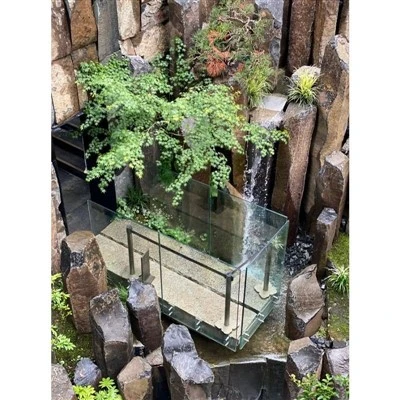
At the end of the day, basalt fountains aren’t just water features—they’re pieces that bring a little bit of nature into man-made spaces, and that’s what makes them worth the investment. If you’re ready to chat about sizing, custom tweaks, or pricing for any of these designs, don’t hesitate to reach out. We can walk through your space, talk about budget, and make sure you get a fountain that works for you, no matter how big or small the project.
Water Feature Stones References:
- National Park Service. (2021). Volcanic Rock Types and Properties. U.S. Department of the Interior.
- American Society of Landscape Architects. (2022). Water Features for Small and Large Commercial and Residential Spaces. ASLA Press.
- Quarry Operations Association. (2020). Durability and Maintenance of Natural Stone Water Features. QOA Industry Report.
- International Plumbing Code. (2023). Standards for Submersible Pumps in Decorative Water Features. ICC.
Orin International Trade Co., Ltd.
With abundant experience, we are one of the most professional basalt rock fountain manufacturers and suppliers in China. We warmly welcome you to wholesale custom made basalt rock fountain from our factory. If you have any enquiry about cooperation, please feel free to email us.
Address: No.3-1, Shangzhongdi Natural Village, Hexian Village, Shuangta Sub-district, Jiangshan City, Quzhou City, Zhejiang Province
E-mail: atlas@orinstone.com
WebSite: https://www.orinstone.com/
