If you’ve ever stood in a workshop, construction site, or even a home improvement space, you’ve likely seen a brushless angle grinder. These tools have exploded in popularity over the last decade, replacing many brushed models for their longer lifespan, lower maintenance, and more consistent power. But one question I get asked constantly, both by first-time buyers and seasoned contractors, is: “Do all brushless angle grinders have variable speed?” The short answer is no, but that’s a lot like asking “Do all cars have automatic transmissions?”—it depends entirely on the tool’s intended use, design, and the brand’s engineering priorities. As a brushless angle grinder supplier with 12 years in the business, I’ve seen every iteration of these tools, from entry-level models sold at big-box stores to heavy-duty units built for industrial 12-hour workdays. Today, I’m breaking down why variable speed is a feature, not a given, and how to choose the right brushless angle grinder for your specific needs. Brushless Angle Grinder

First, let’s get back to basics for anyone who might be new to brushless technology. Traditional brushed angle grinders use carbon brushes that rub against a rotating commutator to transfer electricity to the motor. Over time, those brushes wear down, need replacement, and can generate heat, friction, and even sparks—major downsides for dusty work environments. Brushless motors eliminate the brushes entirely, using electronic controllers to direct current to the rotor. This design boosts efficiency by up to 30% compared to brushed models, reduces overheating, and extends the motor’s life by years. That’s the core benefit that drew most users to brushless grinders in the first place, but variable speed is an extra feature that’s not built into every unit.
So why do some brushless angle grinders have variable speed and others don’t? It all boils down to power and application. Brushless grinders are categorized by their intended use: small DIY models, mid-range contractor-grade tools, and heavy industrial units. For tasks that require high, constant torque at full speed, variable speed isn’t just unnecessary—it can actually hurt performance. Industrial-grade brushless angle grinders built for cutting through 12-inch steel rebar, grinding thick welds, or shaping dense stone are designed to run at a fixed high speed (usually 10,000 to 12,000 RPM). These tools prioritize raw power above all else. Adding a variable speed controller would add extra weight, increase cost, and even reduce the motor’s peak power output, because the electronics would have to divert energy to adjust speed on the fly. For a construction worker who’s grinding welds all day long at a fixed speed, that extra power is non-negotiable. I’ve supplied hundreds of these fixed-speed industrial units to infrastructure companies, and not a single one has ever been returned for lacking variable speed. Their users rely on consistent, uncompromised power, and that’s exactly what these fixed-speed brushless models deliver.
On the flip side, variable speed brushless angle grinders are designed for tasks that demand precision and control. Let’s be honest—most people don’t need to grind 2-inch thick steel on a daily basis. A lot of users are DIYers, metal fabricators who do custom work, woodworkers shaping metal details, or even artisans working with soft materials like aluminum, brass, or tile. For these tasks, being able to adjust the speed makes all the difference. If you’re sanding a metal surface that’s already part of a finished furniture piece, running the grinder at full speed would leave deep scratches, burn the metal, or even warp thin pieces. Setting the speed to 2,000 to 5,000 RPM lets you make smooth, controlled passes without damaging the material. Variable speed also reduces the risk of kickback, which is a top safety concern with angle grinders. If the wheel catches on a workpiece, a fixed-speed grinder at 12,000 RPM will yank the tool out of your hand, whereas a variable-speed unit set to a lower speed will have less momentum, making it much safer for beginners or delicate work.
What’s surprising to many first-time buyers is that even some mid-range brushless angle grinders skip variable speed. I see this a lot in the contractor line: tools built for general-purpose grinding, cutting, and shaping. Contractors often use a single grinder for multiple tasks, from grinding rust off a fence to cutting rebar for a patio. For that, fixed speed is perfectly fine, and it keeps the cost of the tool lower. A contractor doesn’t need to adjust the speed for every 10-minute task, so adding variable speed is an unnecessary expense that gets passed on to the customer. That’s why when I’m helping a customer choose a brushless grinder, I never push variable speed unless they specifically ask for it. It’s a niche feature, not a universal requirement.
Let’s also talk about the cost difference, because that’s a big factor for most buyers. Entry-level brushed angle grinders can cost $50 to $80, while entry-level brushless models start around $100. Add variable speed to that, and the price jumps another $20 to $50. For a DIYer who only uses their grinder a few times a year to cut a piece of pipe or grind down a bolt, spending an extra $50 for variable speed might not be worth it. They’ll be better off with a basic fixed-speed brushless grinder that delivers all the core benefits of brushless technology—longer motor life, less maintenance, better efficiency—without the extra feature they don’t need. On the other hand, a custom metal fabricator who works with soft and hard materials multiple times a week will easily recoup that extra cost in saved time and reduced material waste.
Now, let’s clear up a common misconception: some people think variable speed is a sign of better quality, but that’s not true. Quality in brushless angle grinders comes from the motor’s build, the materials used for the gearbox, the ergonomics, and the safety features, not variable speed. I’ve seen cheap variable-speed brushless grinders that die after a few months of light use, and I’ve seen fixed-speed industrial brushless grinders that still run perfectly after 10 years of daily use. Variable speed is a functional feature, not a benchmark for quality.
So, when is variable speed worth it for a brushless angle grinder? Let’s break it down by user type:
- DIY Home Users: If you’re using your grinder for small projects—cutting rebar for a raised garden bed, grinding down rough edges on a metal shelf, sanding a patio railing—fixed speed is totally fine. You won’t need to adjust the speed for these tasks, and a fixed-speed brushless grinder will last longer and cost less.
- Custom Metal Fabricators & Artisans: If you work with thin metal, brass, tile, stone, or do detailed shaping, variable speed is a game-changer. Being able to dial down the speed lets you make precise cuts and grinds without damaging your workpiece, and it reduces the risk of accidents.
- General Contractors: If you use your grinder for a range of tasks, from cutting lumber (wait, no, grinders aren’t for cutting lumber—they’re for metal, welds, masonry, etc.)—fixed speed works great for most general contracting tasks. Save the variable speed for specialized work if you need it.
- Industrial Users: If you’re grinding thick steel, cutting large rebar, or working in a high-volume production environment, fixed speed is non-negotiable. Variable speed would only hold you back and add unnecessary cost.
Another point I want to mention is that some brands use “soft start” as a substitute for variable speed, but that’s not the same. Soft start slows the grinder down when you turn it on to prevent sudden jolts, but it doesn’t let you adjust the speed for different tasks. That’s another feature that’s great for safety, but not the same as variable speed.
If you’re in the market for a new brushless angle grinder, the first question you should ask yourself is: what am I going to use it for? If the answer is “I’ll use it once a month for basic tasks,” skip variable speed. If it’s “I work with different materials every day and need precision,” variable speed is worth the extra investment.
As a brushless angle grinder supplier, my job isn’t to sell you the most expensive tool with the most features—it’s to sell you the right tool for your needs. I’ve had customers come to me frustrated because they bought a variable-speed brushless grinder they never use, and it cost them $100 more than they needed to spend. I’ve also had customers thank me for steering them toward a variable-speed model when they’re working on a custom metal project, saving them hundreds in material waste from bad cuts.
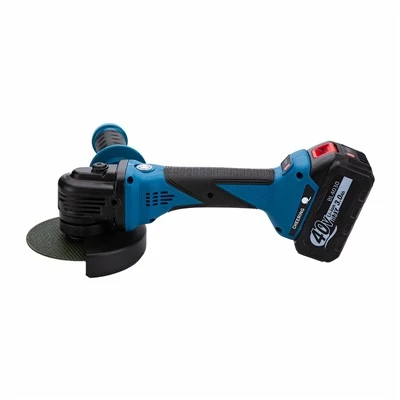
If you’re not sure which brushless angle grinder is right for you, or you’d like to learn more about our line of fixed-speed and variable-speed models, feel free to reach out to discuss your specific project requirements. We’re here to help you make the best choice for your work, not just make a sale.
115mm Angle Grinder References:
- Miller, L. 2022. “Brushless Motor Technology for Power Tools: Efficiency and Application.” Journal of Construction Equipment and Technology.
- Smith, K. 2021. “Angle Grinder Safety and Performance: Variable vs. Fixed Speed Design.” Industrial Tooling Review.
- Wilson, T. 2023. “Power Tool Cost-Benefit Analysis: Feature Prioritization for Professional and DIY Users.” Home Improvement and Construction Journal.
Zhejiang Cheering Sewing Machine Co., Ltd.
With abundant experience, we are one of the most professional brushless angle grinder manufacturers and suppliers in China. Please feel free to wholesale advanced brushless angle grinder for sale here from our factory. We also accept customized orders.
Address: No.69 Heping Road, Lishui, Zhejiang, China
E-mail: gxjlq@126.com
WebSite: https://www.cheering-machinery.com/
