If you’ve ever visited a working wheat roller mill—whether it’s a small, family-run operation turning out flour for a local bakery or a large-scale facility shipping tons of product across the country—you know that it’s equal parts precision equipment and a well-oiled system (pun very intended). As a supplier who’s spent 12 years walking mill floors, troubleshooting breakdowns, and training maintenance teams, I’ve seen firsthand that the best mills aren’t just built well; they’re maintained well. I’ve watched a mill skip a critical bearing check and shut down for three days, costing them $40,000 in lost revenue before we even walked in the door to fix it. I’ve also seen a mill that stuck to a strict, consistent maintenance schedule run smoothly for 15 years without a major, unplanned shutdown. The difference? They treated maintenance not like a chore, but as the backbone of their operation. Today, I want to walk you through exactly what that looks like for a wheat roller mill—the parts you can’t ignore, the frequency of checks that actually work, and the small, consistent habits that keep your mill running, not waiting around for repair calls. Wheat Roller Mill
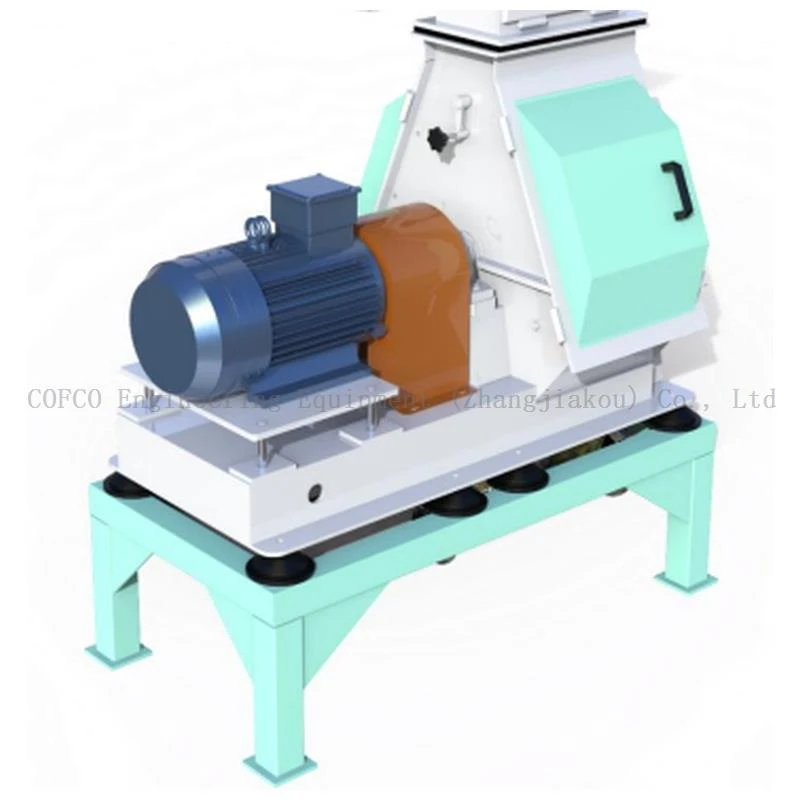
First, let’s start with the core of the mill: the roller pairs. These are the metal rollers that crush wheat kernels to separate the bran, germ, and endosperm, and they’re the most heavily used part of the entire system. Every day, they’re grinding hard, abrasive grain, which chips at their surface, builds up wear, and misaligns if left unchecked. The biggest mistake I see new mill owners make is treating roller maintenance as a “wait until they stop producing good flour” task. By the time you notice a drop in flour quality—say, inconsistent particle size or a higher bran content—you’ve already caused unnecessary wear on other parts downstream, like the sifters.
So what does proper roller maintenance actually entail? There are two key parts here: regular gap adjustments and periodic re-grinding (or re-texturing) of the roller surface. Most mills run their rollers in pairs, often a corrugated (toothed) roller and a smooth roller, each with a specific gap set depending on the type of flour they’re producing (all-purpose, whole wheat, bread flour). Every 8 to 12 hours of continuous operation—less if you’re running high-moisture wheat, which is more abrasive—you need to check and adjust that gap. Here’s the trick: don’t just go by the factory setting. Feel the gap with a thin strip of wheat kernel instead of a metal gauge. Metal gauges don’t account for the slight flexibility of the roller bearings or the heat buildup during operation, which can throw off measurements mid-shift. I worked with a mill in Kansas last year that used only metal gauges, and their gap was off by 0.002 inches in the afternoon, leading to 200 tons of flour that was too coarse to sell. Once we switched them to wheat-based gap checks, that issue vanished.
Then there’s the roller surface. Corrugated rollers need their teeth sharp and uniform, and smooth rollers need a matte, non-glossy texture to avoid slipping on grain. Every 100 to 150 operating hours, you need to re-texture them. A lot of mills will wait until the corrugations are worn smooth or the rollers are slipping, but re-texturing on schedule avoids that. For roller mills processing 50 tons of wheat a day, that works out to about once a month, depending on how many shifts you run. When you do re-texture, make sure the roller grinder is calibrated correctly—no more than 0.001 inches of variation across the entire roller length. I’ve seen a $500 roller grinder misaligned by half that, leading to uneven texture that made the entire pair useless after just two weeks. It’s worth spending 10 minutes calibrating that grinder every time you use it, or hiring a technician to do it once a quarter to keep it on point.
Next up: the bearings. These are the unsung heroes of the mill. They hold the rollers, sifters, augers, and every other moving part in place, taking the constant, heavy load of thousands of pounds of grain every hour. The most common issue I encounter is mill owners using generic grease on their bearings, or greasing them too much, or too little. Over-greasing is just as bad as under-greasing—it causes heat buildup that breaks down the grease, leading to bearing failure. For wheat roller mills, we recommend a food-grade, extreme-pressure (EP) grease designed for heavy, slow-moving machinery, applied in precise amounts: about one-third to one-half of the bearing cavity, every 150 to 200 operating hours. More isn’t better here.
But grease isn’t enough. You need to check the bearings for play or heat every shift. A quick way to test bearing play on a roller is to turn it by hand when the mill is shut down for a break. If it wobbles more than 1/16 of an inch, that’s a sign the bearings are worn and need replacement. For sifter bearings, which are smaller but run at higher speeds, you can use a thermal camera to check for overheating—any spot that’s 10 degrees hotter than the rest of the bearing housing is a red flag. Last year, I got a frantic call from a mill in Oklahoma that said their sifter had made a grinding noise. We showed up 45 minutes later, and the sifter bearing had already seized, causing $12,000 in damage to the sifter frame. Turns out, their maintenance team had skipped the bearing check that day because they were short-staffed. That’s the cost of cutting even one small check.
Then there’s the sifter system, another high-wear part that’s often overlooked. Sifters separate the crushed wheat into different flour grades, using mesh screens that get clogged with bran, flour dust, and other debris over time. If screens are clogged, they don’t sift properly, leading to inconsistent flour and even overloading the roller pairs. The key here is two-fold: regular cleaning and scheduled screen replacement. Every 8 to 10 hours of operation, you need to clean the screens with a soft-bristle brush or compressed air (set to low pressure—high pressure can tear the mesh). A lot of mills use harsh air pressure, which damages the screen’s weave and shortens its life. Every 1,200 to 1,500 operating hours, you should replace the screens, regardless of how they look. Waiting until a screen breaks mid-shift can contaminate your flour with small metal or mesh fragments, leading to product recalls—something no mill wants to deal with. I once worked with a small mill in Iowa that tried to stretch screen life for an extra two weeks; a screen tore, and they had to throw away 10 tons of flour, costing them $15,000. That’s way more than the cost of new screens.
Don’t forget the drive system, either. That’s the belts, pulleys, and motors that power every part of the mill. Belts stretch, crack, or slip over time, and a slipping belt means the roller pairs aren’t running at the correct speed—too slow, and you don’t crush the wheat enough; too fast, and you cause excess wear on the rollers. For roller mill belts, you should check tension every 50 operating hours. A simple way to test tension is to press down on the belt with your thumb; it should give about 1/2 inch under moderate pressure. If it’s too loose or too tight, adjust it immediately. Also, inspect belts for cracks or fraying every shift—don’t wait until a belt snaps, which can shut down your entire mill in the middle of a production run. Last month, a mill in Texas told me they had a belt snap during a night shift, and it took their team three hours to replace it, because they didn’t keep a spare belt on hand. Pro tip: always keep at least one spare belt of each size, labeled clearly, in your maintenance room. It’s a small investment that saves hours of downtime.
One thing that’s become increasingly important in the last five years, as more mills adopt digital monitoring tools, is condition-based maintenance. This isn’t about replacing parts on a schedule—it’s about using data to replace them only when they need it. For example, some of our clients install vibration sensors on their roller pairs and bearings, which send real-time data about wear and misalignment to their phones. If a roller’s vibration increases by 10%, that’s a sign it needs gap adjustment or re-texturing, not waiting until it fails. A mill in Minnesota uses these sensors and has reduced their unplanned downtime by 60% in two years. But even if you don’t have fancy digital tools, simple, manual checks every shift work just as well—if you stick to them.
I also want to talk about a mistake that’s easy to make: waiting for a “slow season” to do major maintenance. A lot of mill owners will put off re-texturing rollers, replacing screens, or overhauling bearings until after a big order is filled, only to hit a lull later. But maintenance doesn’t wait for lulls, and putting it off almost always leads to bigger, more expensive problems. Last year, a mill that processes flour for holiday baking decided to skip roller re-texturing in November, because they were running 24/7 to fill holiday orders. By mid-December, their rollers were so worn that they had to shut down for two full days, missing three major bakery orders and paying $20,000 in penalty fees. It would have cost them $3,000 to re-texture the rollers in October, and saved them tens of thousands of dollars. The right approach is to schedule scheduled maintenance as part of your production plan, not separate from it. If you need to do major work, plan for it during a shift change, or split it into small blocks over a week, so you don’t disrupt operations.
Another key point: keep detailed maintenance records. This isn’t just paperwork—it’s a tool that helps you spot patterns. If you notice that a specific bearing on your No. 2 roller pair needs replacement every six months, you can stock that part and schedule the replacement around other work, instead of scrambling when it fails. I’ve seen mills keep handwritten logs for decades, and others use simple spreadsheet tools, both work. I recently worked with a new mill that tried to skip logs, and within three months, they’d forgotten when they last re-textured their rollers, leading to a 10% drop in flour quality until we sorted it out. The log doesn’t need to be complicated—just note the date, the part checked, the work done, and any observations (like “bearing A had slight play” or “screen 3 was clogged more than usual”).
At the end of the day, maintaining a wheat roller mill isn’t about doing huge, complicated tasks every few years. It’s about the small, consistent, daily checks that add up to a mill that runs smoothly, avoids costly shutdowns, and produces consistent, high-quality flour. I’ve talked to mill owners who treat maintenance like an afterthought, and I’ve talked to those who make it a priority, and the difference in their bottom line is night and day. Unplanned downtime can cost thousands of dollars an hour, while preventive maintenance costs a fraction of that—both in time and money.
If you’re a mill owner or operator reading this and thinking, “My team could use a hand setting up a maintenance schedule, or upgrading parts to make checks easier,” don’t hesitate to reach out. We’ve worked with mills of all sizes, from small local operations to large commercial facilities, to build custom maintenance plans, provide high-quality replacement parts, and train teams to stick to consistent checks. No matter what size your mill is, investing in proper maintenance is the single best way to protect your equipment, your product, and your bottom line.
Commercial Grain Mill REFERENCES
- Wheat Roller Mill Operation and Maintenance Guide. American Association of Cereal Chemists International, 2021.
- Industrial Bearing Maintenance Best Practices for Agricultural Equipment. National Agri-Machinery Association, 2022.
- Sifter System Maintenance for Flour Milling Operations. Flour Milling & Baking News, Vol. 96, No. 4, 2023.
- Preventive Maintenance Strategies to Reduce Unplanned Downtime in Grain Processing Facilities. Journal of Food Process Engineering, Vol. 45, No. 10, 2022.
COFCO Engineering Equipment (Zhangjiakou) Co., Ltd.
As one of the most professional wheat roller mill manufacturers and suppliers in China, we also support customized service. Please feel free to wholesale advanced wheat roller mill for sale here from our factory. Quality products and reasonable price are available.
Address: No.4 ZhongLiang Street, high-tech industrial development zone, Zhangjiakou, Hebei, PRC
E-mail: mayihui@cofco.com
WebSite: https://www.ceeflourmill.com/
