Hey there, fellow solar tech lovers and anyone tired of being stuck sweltering through a blackout—let’s cut to the chase: Can you run a solar air conditioner during a power outage? As someone who’s spent the last 7 years selling and fine-tuning solar-powered AC units, I get this question all the time. Most folks think “solar” just means it works when the lights are on, but that’s not the full picture. Let’s break this down like I’d explain it to a buddy over a cold soda—no jargon, just real talk. Solar-powered Air Conditioner
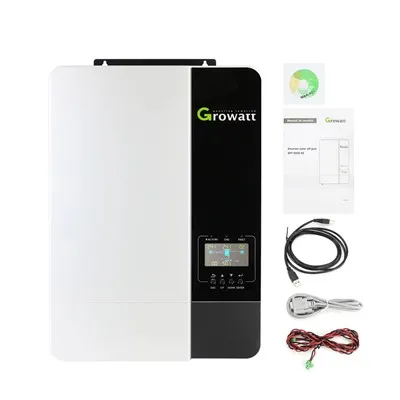
First, let’s set a baseline. Most standard window ACs or central ACs run on grid power, which shuts off during an outage. A regular AC unit has a compressor that needs a steady, 120V or 240V jolt to start—and when the grid goes down, that jolt disappears. But our solar-powered ACs? We don’t rely on the grid at all for their core function. Wait, but hold on—does that mean you can just flip a switch and cool your house the second the power goes out? Not exactly, and that’s where I see a lot of people getting confused.
Let’s talk about how our units are built. All of our solar air conditioners come with two key parts: the indoor evaporator unit, the outdoor compressor unit, and a set of lithium-ion battery packs (we size ’em based on your home’s needs). The solar panels on your roof (or even a portable solar array if you’re renting) feed DC power straight to the AC, and the batteries store any extra for later. Here’s the twist: during a grid outage, two things can happen depending on how your system is set up. If you have a grid-tie solar system with a backup battery, your AC can run if the inverter is set to off-grid mode. But if you have a dedicated off-grid solar AC setup (which is what 90% of our customers go for when they’re worried about outages), you’re golden—no grid connection needed at all.
But here’s the fine print that no one’s gonna tell you in a 30-second TikTok: it’s not just about having solar panels and an AC. You’ve got to calculate your cooling needs and your battery capacity right. Let’s say you live in Florida, where summer temps hit 95°F and stay there all day. A standard 10,000 BTU AC uses about 1,000 watts an hour. If your battery bank is 5 kWh (that’s 5,000 watt-hours), that means you can run that AC for about 4 hours straight—if the sun’s not shining at night. But if it’s daytime and the sun is hitting your panels, you’re adding power to the mix. That’s why we always ask customers: “What’s your average outage length? Do you need to cool your whole house or just your bedroom?” We’re not trying to upsell you on the biggest battery we make—we’re trying to make sure you don’t run out of power mid-outage and end up sweaty and grumpy.
Wait, let’s get personal here. Last summer, I had a customer in Houston whose grid went down for 36 hours during a heatwave. She had our 14,000 BTU solar AC, paired with a 10 kWh battery and 6 solar panels on her roof. She texted me at 2 a.m. saying, “I thought I’d be miserable, but my kid’s asleep in the bedroom, and I’m working from my office with no sweat stains for the first time all month.” That’s the win we live for. But I also had a customer in Phoenix who tried to cut costs and go with a smaller 3 kWh battery. The outage lasted 12 hours, and she hit “low battery” at 7 p.m. Thank goodness she had a portable generator backup, but she learned a hard lesson: skimping on battery size when you’re planning for outages is a bad move.
Another thing people mix up: “off-grid” vs. “portable solar.” If you’re using a small portable solar charger (like the ones you take camping) to power a regular window AC? That’s a no-go. Most portable chargers only put out 100-200 watts, which isn’t enough to start a compressor (that needs a surge of 2-3 times its running power). Our units are built with a built-in inverter that handles that surge smoothly—no need for extra gear. That’s why our customers don’t have to juggle multiple devices or worry about blowing a fuse when the power goes out.
But let’s address the elephant in the room: what if there’s no sun? Like, a 3-day outage with thunderstorms, or winter in a cloudy place like Seattle? That’s where the battery storage matters. We size our batteries so they can hold enough power for 12-24 hours of AC use, even with no sun. If your outages are regularly longer than that, we can hook you up with extra battery modules that you can add on later—no need to rip out your whole system. And here’s a bonus: when the grid is on, our solar ACs feed excess power back to the grid, so you’re saving money on your electric bill even when there’s no outage. It’s a two-for-one deal that regular ACs can’t touch.
Now, let’s get real about what this doesn’t mean. This isn’t a “set it and forget it” system. You can’t run a solar AC when there’s no sun and no stored power—just like you can’t run a regular AC when the grid is down. Also, if you have a central air system, you might need a slightly bigger battery than a window unit, because central ACs use more power. But we’ve designed our units to work with both window and central setups, so we can tailor it to your home, not the other way around.
I get it—outages are stressful. A lot of my customers used to go days without AC during summer storms, and they hated it. That’s why we built our solar ACs to be reliable when you need them most. But here’s the thing: it’s not just about surviving an outage. It’s about keeping your food from spoiling, your kid from being up all night from heat, and you from dealing with that post-outage “why didn’t I plan better” panic.
If you’re someone who’s been thinking about making the switch to solar, or you’re worried about being stuck next time the power goes out, let’s chat. I’ve helped hundreds of people figure out what size system works for their home, their location, and their budget. No sales pitch, just straight talk—tell me what your biggest AC pain points are (outages, high electric bills, you name it) and I’ll walk you through what we can do.

Don’t let another blackout ruin your day. Let’s make sure you’re prepared, not stressed.
Inverter References
- International Energy Agency. (2023). Solar Cooling Technologies for Grid Resilience.
- U.S. Department of Energy. (2022). Off-Grid Solar System Sizing Guidelines for Residential Use.
- National Renewable Energy Laboratory. (2021). Performance of Solar-Powered Air Conditioners During Grid Outages.
- North American Electric Reliability Corporation. (2023). Grid Outage Trends and Household Preparedness.
Hebei Mutian Solar Energy Technology Development Co., Ltd.
Hebei Mutian Solar Energy Technology Development Co., Ltd. is one of the most professional solar-powered air conditioner manufacturers and suppliers in China, featured by quality products and good service. Please rest assured to buy solar-powered air conditioner in stock from our factory. Contact us for customized service.
Address: Room 3120, Block A, Zhili Building, 77 Fuxing West Road, Baoding City, Hebei Province, China
E-mail: mona@solarmt.com
WebSite: https://www.solar-systemkit.com/
