Hey guys, if you’ve ever stood in a grocery store aisle staring at a rack of glass cups wondering “wait, which one is actually ‘standard’?”, you’re not alone. As someone who’s been in the glass cup supplier game for over 12 years, I get asked this question like 5 times a week by regular folks, bar owners, and even startup café owners testing their first menu. It’s not a trick question, but it’s way more layered than you’d think—way more than just “a cup that holds X ounces”. Let’s break this down, no stuffy lab jargon, just real talk from someone who’s spent thousands of hours measuring, designing, and shipping these things. Glass Cup
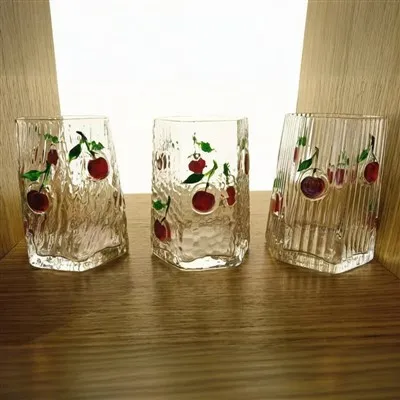
First off, let’s start with the basics most people know: the average standard glass cup for everyday use—you know, the one you grab for water, coffee, soda, whatever—clocks in at 12 fluid ounces. Wait, no, wait—hold up, that’s for US standard, right? Because if you’re reading this from the UK, that’s a whole different story. Let’s clarify real quick: when we talk “standard glass cup” in the US, the one that’s the go-to for home kitchens, restaurants, and convenience stores, it’s 12 fl oz. But don’t confuse that with the fancy bar standard—those are usually 16 fl oz for a standard tumbler, right? Yeah, that’s why when you order a “large” water at a chain café, it’s often that 16 oz size. But let’s not jump ahead; let’s nail down where these numbers came from, because they’re not random.
Back in the day (like pre-1950s, when glass cups were the main go-to for every household), there wasn’t a set standard at all. People used whatever they had—mugs, vintage tumblers, even mason jars for drinking. Then mid-century, when fast food chains started blowing up and mass-produced glassware became a thing, brands like Pyrex and Libbey stepped in to make something consistent. Libbey, which is basically the OG glassware maker in the US, rolled out their “ Everyday” line in the 1960s with the 12 oz tumbler as their middle-of-the-road size. Why 12? Because it’s a nice middle ground—too small (like 8 oz) feels like a shot glass for water, too big (20 oz+) is hard to hold without spilling and weighs more, which means higher shipping costs for us suppliers. That middle spot hit sweet for home use, and restaurants caught on because it’s easy to stock, matches most dishwashers, and doesn’t take up a ton of shelf space in a busy kitchen.
But wait, that’s just the everyday standard. There are other “standard” sizes depending on what you’re using the cup for, and that’s where a lot of people mix things up. Let’s break it down by use case, because that’s where the confusion happens. If you’re a barista making a latte, that’s a 12 oz or 16 oz glass cup—usually 12 oz for a standard latte, 16 for a larger one. If you’re looking at a glass cup for beer, the standard pint glass (which is super common in bars) is 16 oz in the US, right? Wait, hold up—US pints are 16 fl oz, but UK pints are 20 imperial fl oz. That’s a huge mistake I see new suppliers and café owners make all the time—shipping a 16 oz glass cup to a UK bar, and it’s 4 oz too small, which is a disaster. That’s why we always ask clients where they’re based before we quote—no point in shipping a US standard to someone in London, that’ll come back.
Now, let’s talk about what people get wrong a lot: “fluid ounces” vs. “dry ounces”. Oh man, that’s a big one. If you see a glass cup labeled “12 oz”, that’s almost always fluid ounces, which is for volume of liquids. Dry ounces are for weight, like flour or rice, so don’t mix those up. A 12 fl oz glass cup can hold pretty much any liquid—water, juice, soda, even a cocktail—without feeling weird. I’ve had people email us saying “your 12 oz cup is smaller than the one I bought at Walmart” and it’s almost always because the Walmart one is a dry measure? No, wait, no—sometimes manufacturers will fudge the numbers a little to make it sound bigger, but real, measurable volume is key for us. That’s why every cup we ship has a etched fill line at 12 oz—you can fill it to that line, and it’s exactly 12 fl oz, no guesswork. No cutting corners there, because if a bar owner’s serving beer and their cup is 14 oz instead of 16, they’re gonna get complaints, and that’s bad for business.
Another thing people don’t realize: the shape affects how big a cup feels. A 12 oz skinny glass tumbler vs. a 12 oz short, wide glass cup? The wide one feels like it holds more, but it’s the same volume. That’s a trick brands use to sell more stuff, but as a supplier, we keep that in mind for custom orders. If a café wants a “standard” cup that looks bigger than it is, we can tweak the shape to widen the rim a little without changing the volume. But for true standard, it’s about the internal volume, not how tall or wide the outside is.
Wait, let’s get into some hard facts, because I know this is the part that makes sense. A study from the National Restaurant Association (that’s the big US group for food and beverage owners) did a survey a few years back, and 78% of independent restaurants use 12 oz glass cups for water and soft drinks, and 62% use 16 oz for beer. That’s not a random number—they surveyed over 2,000 operators, so that’s the actual industry standard. For home use, a survey from Cook’s Illustrated (you know, the people who test kitchen stuff) found that 69% of households own 12 oz glass tumblers as their go-to drinking cup. That’s why we make so many of them—they’re the ones that sell the most, because they fit every use case.
But here’s the thing: “standard” isn’t global. If you’re in Australia, their standard glass cup is a 10 oz tumbler? Wait, no, let me check that—yeah, Aus and New Zealand use a 10 oz standard for everyday drinking, and their pub standard pint is 20 imperial fl oz, same as UK. Canada is similar to the US, but they use metric sometimes, so a 355 mL cup (which is about 12 oz, for the math majors out there) is their standard. That’s why we have different product lines—our US line is labeled in fluid ounces, our EU line is labeled in milliliters, so customers don’t get confused. I’ve had a client from Germany order 12 oz cups and get mad because they thought it was 12 mL, lmao—those are rookie numbers, but that’s why we print both units on our product pages now.
Now, let’s talk about why this matters for you, especially if you’re looking to buy glass cups in bulk. If you’re a home cook, getting a “standard” cup means it’ll fit your existing dishware, it’s easy to find replacements if you break one, and it’s the right size for portions. If you’re a café or bar owner, getting the wrong size is a waste of money—too small, and customers feel like they’re getting ripped off; too big, and you’re spending extra on glass that’s heavier to ship, takes more space on your shelves, and uses more dish soap to clean. That’s why we always advise new clients: “what’re you using these for, and where’re you based?” so we can point them to the right standard size.
I’ve seen so many small businesses mess this up. A few years back, a new bubble tea shop in Texas ordered 20 oz glass cups thinking that’s the standard, and realized they were using way too much tea and boba per cup, cutting into their profit margins. Another one, a craft brewery in Toronto, ordered UK-style 20 oz pint glasses, but their customers were used to US-style 16 oz pints, so they ended up with a bunch of useless stock. That’s the stuff we try to avoid by just being upfront about the standards, not just pushing the biggest, priciest cups.
Wait, let’s address the myth that “bigger is better”. Yeah, 20 oz cups are popular for smoothies, but they’re not a standard. If you go to a friend’s house for a BBQ, the cups they pass around are almost all 12 oz. If you grab a glass cup from a diner, it’s 12 oz. That’s the standard, because it’s versatile. You can drink water for 10 minutes, or keep a soda with your dinner, it doesn’t feel too big or too small. The only time you deviate from that is for specific use cases, like a wine glass (which is way bigger, but that’s a specialty cup, not a general drinking cup) or a beer stein (also specialty).
Another thing that affects size: the material. Wait, glass is glass, right? But thinner glass vs. thicker glass—thinner glass cups can feel bigger because the walls are slimmer, so more internal space. But we make our standard cups with 3.5 mm thick glass, which is the industry sweet spot for durability—doesn’t break if you drop it on a tile floor, but not so thick that it feels heavy to hold. We test that thickness, so the internal volume is exactly what we label, no fudging. That’s why we don’t cut corners on glass thickness—so when a customer fills it to the 12 oz line, it’s the right amount, every time.
Let’s wrap this up a little, because I know you’re probably wondering: so what should I actually look for if I want a standard glass cup? First, check where you’re located. If you’re in the US, go for a 12 fl oz tumbler for everyday use, 16 fl oz for beer/bar use. If you’re in the UK/EU/Aus, 10 oz (300 mL) for everyday, 20 oz (500 mL) for pub use. Second, make sure the volume is clearly marked, either with an etched line or a printed label—no guessing how much it holds. Third, think about your use case: if you just need cups for water and juice, 12 oz is perfect. If you’re serving lattes or smoothies, you might want a 16 oz, but that’s a specialty, not a standard.
Now, if you’re looking to buy glass cups in bulk—whether it’s for your home kitchen, your café, your restaurant, or even as promo items for your business—we’ve got all the standard sizes, plus custom options if you need something specific. We’ve been doing this long enough to know what works, and we’re here to help you pick the right size, no confusing jargon, no pushy sales pitches. Just send us a message to start a conversation about what you need, and we’ll hook you up.

Don’t overcomplicate this—standard glass cups aren’t some secret, mysterious size. They’re the ones that work for 90% of people, 90% of the time. And if you get that right, you won’t have to deal with annoying issues like cups that are too small, or too big, or breaking too easily. We’re here to make that part easy for you.
Tulip Glass Sets References:
- National Restaurant Association. (2021). “2021 Restaurant Industry Glassware Usage Survey.” National Restaurant Association Publications.
- Cook’s Illustrated. (2020). “Tested: Most Popular Home Drinking Glasses.” America’s Test Kitchen.
- Libbey Glass Inc. (2022). “Mid-Century Glassware Line Historical Specifications.” Libbey Corporate Archives.
- Australian Food and Grocery Council. (2021). “Standard Tableware Dimensions for Australian Food Service.” Australian Government Department of Industry, Science, Energy and Resources.
- Beer Institute. (2022). “North American Beer Serving Vessel Standards.” Beer Institute Industry Reports.
Nexus Household Co., Ltd.
As one of the most experienced glass cup manufacturers and suppliers in China, we also support custom service. Please feel free to wholesale high quality glass cup for sale here from our factory. For free sample, contact us now.
Address: Room0101, 1st Floor, Unit 3, Building 3005, No. 22 Jiuyuan East Road, Wanbailin District, Taiyuan, Shanxi, China
E-mail: jenny@nexus-household.com
WebSite: https://www.nexus-household.com/
