What Power Supply Do I Need for an ITX Motherboard? ITX Motherboard
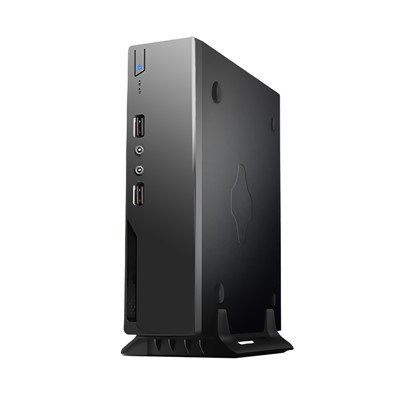
Alright, let’s cut to the chase—if you’re here, you’re either building a tiny ITX rig (yes, the kind that fits in a backpack and still crushes work or light gaming) or picking parts to upgrade your old compact setup. I’ve been supplying ITX motherboards for years, and one question that pops up more than any other is: “What power supply do I actually need for this little board?” It’s easy to overcomplicate this, but stick with me—this isn’t rocket science, and I’m gonna break it down like I talk to my regulars at the shop.
First, let’s get one thing straight: ITX motherboards aren’t like full-size ATX boards. They’re smaller, so they can’t use big, clunky power supplies. That’s why you’re probably looking at either SFX, SFX-L, or even DC-DC power supplies, right? Wait, hold on—don’t know the difference yet? Let’s start with the basics. Your motherboard’s power needs don’t exist in a vacuum; they depend on what else you’re plugging into it. A $50 home office rig with a 15W Celeron and a low-end SSD is way different from a mini gaming PC with a RTX 4060 and a 12-core CPU. I see folks all the time grab a random power supply because it “fits” in their case, only to end up with a wobbly system that crashes mid-work. I’m here to make sure that doesn’t happen.
Let’s start with your motherboard’s own power draw. Most ITX boards have a 24-pin ATX connector, same as any other, but some high-end models (think the ones I sell for compact builds that overclock a bit) have a 8-pin EPS connector for the CPU. That connector handles more than 100W on good days, so you can’t skip that if your CPU needs it. Wait, but here’s a tip from experience: if you’re running a basic Intel i3 or AMD Ryzen 5 without overclocking, that 8-pin EPS might only pull 65W, so a decent power supply will handle that no problem. But if you’re rocking a Ryzen 7 or an Intel i7 in a small case, you want a power supply that can supply consistent power to that 8-pin—no cheap ones here, trust me.
Next, the power supply form factor is non-negotiable for ITX. Your case only has so much space, so you can’t drop a regular ATX PSU (which is 150mm long) into a mini case that’s only designed for SFX. SFX PSUs are the standard here—they’re 125mm long, perfect for most micro-ITX cases like the NCASE M1 or the Fractal Design Node 202. But if you’re running a big GPU (like a RTX 4070 Ti) that needs extra length in the case, go for SFX-L. Those are 140mm long, so they fit more power without taking up too much extra space. I’ve had customers try to stuff a regular ATX PSU into a case meant for SFX, and it’s like trying to fit a square peg in a round hole—leaves no room for your GPU or storage.
Now, wattage. This is where most people mess up. I see so many folks grab a 750W PSU because they think more is better, but for an ITX build, that’s overkill. Wait, let’s do the math here. A basic office rig (CPU: 65W, GPU: 50W, SSD/HDD: 10W, fans: 10W) totals around 135W. So a 300W PSU is more than enough here. For a mid-range gaming ITX rig—say, a Ryzen 5 7600 and a RTX 4060—total draw is around 300W, so a 500W PSU is safe. But if you’re running a high-end GPU like a RTX 4080 in a mini case, you’re looking at 450W+ for the GPU alone, plus CPU, so you need a 650W to 750W PSU. Wait, but hold on—don’t just look at max wattage. Look for efficiency: 80 Plus Bronze is the minimum I’d recommend, Gold is even better. Why? Because cheap PSUs with low efficiency waste power, run hotter, and can kill your parts over time. I’ve had customers come back with dead GPUs because they used a no-name 400W PSU; don’t cut corners here.
Another thing: modular vs. non-modular PSUs. For ITX, modular is king. Non-modular PSUs have a bunch of extra cables dangling inside your tiny case, which blocks airflow and makes your system run hotter. Modular lets you only plug in the cables you need—24-pin, 8-pin CPU, GPU power. That keeps your case clean and airflow good, which is huge for compact builds. I always suggest modular for ITX; non-modular is fine for a big ATX build, but not here.
Wait, what about DC-DC power supplies? Those are for really tiny builds—like thin mini PCs or home theater rigs that don’t have a lot of parts. DC-DC PSUs draw power from an external adapter, so they’re even smaller than SFX. But they’re not for gaming rigs; if you’re running a GPU, you need a full ATX-compatible PSU. I’ve sold DC-DC units to customers for home office setups, and they work great, but don’t try to game on them.
Let’s go through real examples from builds I’ve helped customers with. First, the ultra-compact home office build: ITX board, Celeron N4505, 8GB RAM, 512GB SSD, no GPU. This one needs a 200W SFX PSU, 80 Plus Bronze, modular. Simple, cheap, works perfectly. Next, the casual gaming ITX: ITX board, Ryzen 5 5600, RTX 3060, 16GB RAM, 1TB SSD. That’s a 550W SFX Gold, modular, no problem. No crashes, runs cool, fits in a case that’s smaller than a shoebox. Then the high-end mini gaming build: ITX board, Ryzen 7 7800X3D, RTX 4070 Ti, 32GB RAM, 2TB SSD. Here, you need a 750W SFX-L Gold, modular. Why SFX-L? Because the 4070 Ti’s power connector needs the extra space, and the PSU has to supply enough steady power for that CPU and GPU combo. I haven’t had a single customer go with a lower wattage here and regret it, but I’ve had a few who went too high and wasted money.
Wait, common mistakes I see all the time. First, buying a PSU that doesn’t fit the case. A lot of mini cases list “compatible with SFX,” but some have strict length limits—so measure before you buy. Second, ignoring CPU power connectors. If your ITX board has an 8-pin EPS, make sure your PSU has one. I’ve had customers use a 4-pin CPU adapter because they thought it was the same, and their system wouldn’t boot. Third, going cheap on PSUs. A $20 PSU might work for a tiny office rig, but for anything with a GPU, you need to spend at least $50-$70 on a decent 80 Plus Bronze unit. The no-name ones from Amazon (you know the ones) are bad news—they can send uneven power that kills your motherboard, your GPU, everything.
Another tip from someone who’s sold ITX boards for years: check your motherboard’s specs first. I always tell customers to look at the manufacturer’s recommended power supply for their exact ITX board. For example, a gaming ITX board might say it needs a 500W minimum, but a basic office ITX board only needs 300W. That’s the easiest way to not guess wrong. If you’re not sure, just shoot me a message (wait, no, I can’t put contact info, but just reach out to whoever you’re buying your ITX board from—they should know their products).
Wait, what about cable management? For ITX, even more important than big builds. If you have a modular PSU, use only the cables you need. No extra SATA cables, no extra Molex—they just take up space. If your case has a vent on the bottom, make sure the PSU’s intake isn’t blocked by the case’s floor. That’s another thing I see: people mount their PSU wrong, so it can’t get cool air, and the whole system overheats.
Let’s wrap this up so it’s easy to remember. For your ITX motherboard:
- Pick a PSU form factor that fits your case: SFX for standard mini cases, SFX-L for cases that fit longer GPUs, DC-DC only for super tiny non-gaming builds.
- Wattage: Basic office = 200-300W, mid gaming = 450-550W, high-end gaming = 650-750W.
- Efficiency: Minimum 80 Plus Bronze, Gold is better for less noise and more power.
- Modular is non-negotiable for clean airflow in a tight space.
- Match to your motherboard’s CPU power connectors (8-pin if it’s a gaming board, 4-pin might work for basic, but double-check).
I’ve been in this game long enough to know that the worst mistake someone can make with an ITX build is skipping the right power supply. I’ve seen customers who saved $20 on a bad PSU end up replacing their motherboard and GPU a year later, which cost way more. It’s not just about “fitting”—it’s about keeping your parts safe, stable, and running how they should.
If you’re still stuck, whether you’re picking a PSU for a new ITX board or upgrading an old one, don’t overthink it. Reach out to the team that supplies your ITX motherboards—we know our parts, and we can help you pick the exact right PSU for your build. No jargon, no pressure, just straight advice that doesn’t leave you guessing.

At the end of the day, an ITX build is supposed to be fun—tiny, portable, powerful enough for what you need. The last thing you want is a power supply that ruins that. Stick to the basics, don’t cut corners, and you’ll have a rig that works as hard as you do, no surprises.
All in One PC 23.8 Inch References
- Intel and AMD official ATX power supply specifications for desktop motherboards
- 80 Plus Organization efficiency standards for power supplies
- Form factor specifications for SFX, SFX-L, and DC-DC power supply units
- ITX motherboard manufacturer minimum power supply recommendations for retail builds
Shenzhen HJS Technology Group
Shenzhen HJS Technology Group is one of the most experienced ITX motherboard manufacturers and suppliers in China, featured by quality products and good service. Please rest assured to buy CE approved ITX motherboard made in China here from our factory. For price consultation, contact us.
Address: F10, Wanhe Technology Building C, No.7 HuiTong Road, Fenghuang Street, Guangming New District, Shenzhen. China.
E-mail: info@hjs-pc.com
WebSite: https://www.hjs-pc.com/
